Give placement the first try
- For a TCL wireless subwoofer, start on the floor near the soundbar, within line of sight.
- Choose between suitable spots by listening. A front corner is an option when you want stronger bass.
- After placement, fine-tune the available bass, sound mode or EQ controls to your taste.
If the box fits neatly but the bass isn't satisfying, we'd work on its location before changing the sound settings, because placement itself changes the bass. That gives you a useful order: find a suitable spot, compare how it sounds, then make the remaining adjustments for your room.
The placement instructions below follow TCL's Canadian support guidance for its soundbar and subwoofer family (opens in a new tab). Wireless placement gives you flexibility, but the route back to the soundbar and the space around the sub still matter when you're choosing where it goes.
Find suitable floor space before listening
Look at the surface beneath your proposed spot before moving the sub there. For this TCL setup, avoid soft surfaces such as couches and thick rugs. If a rug covers the space you're considering, look for another suitable floor position before including that location in your listening comparison.
Keep the subwoofer out of cabinets and from behind closed doors. A storage compartment in the TV stand may look convenient, but it falls within TCL's enclosed-placement restriction. Choose open floor space when you're deciding how to fit the sub into the room.
Check the nearby furniture and walls as well. Keep the box away from anything that might rattle, so the surrounding surfaces don't add their own noise when bass plays. This makes the immediate surroundings part of choosing the spot, alongside whether the box physically fits.
How far from the soundbar can it go?
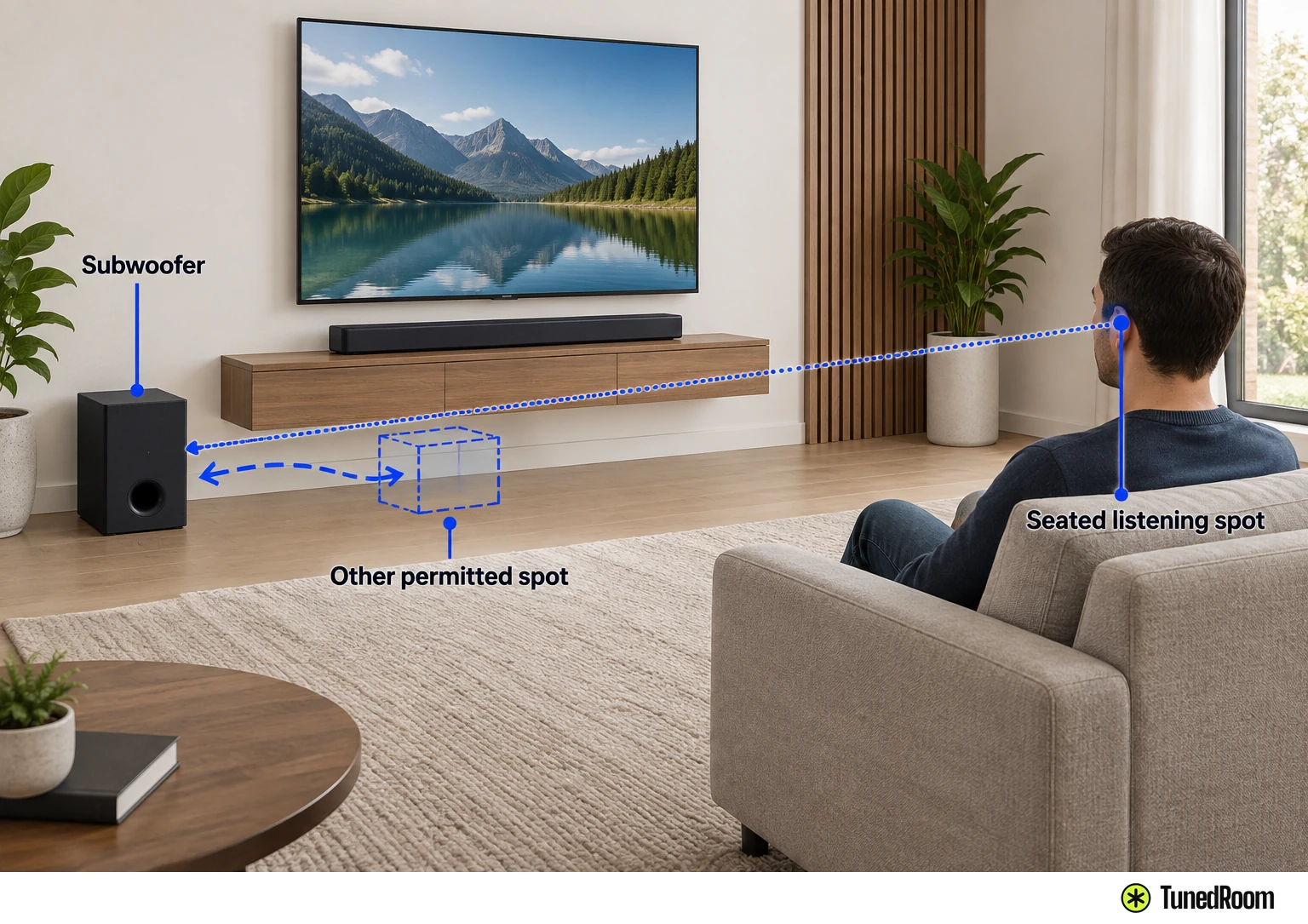
Keep your wireless subwoofer within about 30 feet of the soundbar, with fewer walls and obstructions between them for the most reliable connection. When you're weighing a position farther across the room, look at what lies between the two units as well as how far apart they are.
That approximate distance is connection guidance, not an ideal listening distance or a guaranteed range. Use it to narrow your placement options, then judge the bass in the suitable locations you've identified. There are separate decisions here: where the wireless link belongs and where you prefer the sound.
For example, when comparing an open route with one interrupted by furniture or walls, favor the clearer route for the connection. TCL's Canadian wireless-placement guidance (opens in a new tab) makes fewer intervening obstacles part of the recommendation, so distance alone shouldn't decide your choice.
A front corner can add bass
If you want more weight from the low end, include a suitable front corner in your comparison. TCL says this position often gives stronger bass. That's a reason to try the corner when the sound feels too light, while still listening for whether you enjoy the overall result.
Don't push the sub right against a wall, because that can cause muddy bass. If yours is already pressed against one and sounds muddy, move it away before listening again. Using the corner area and putting the box directly against the wall are different placement choices.
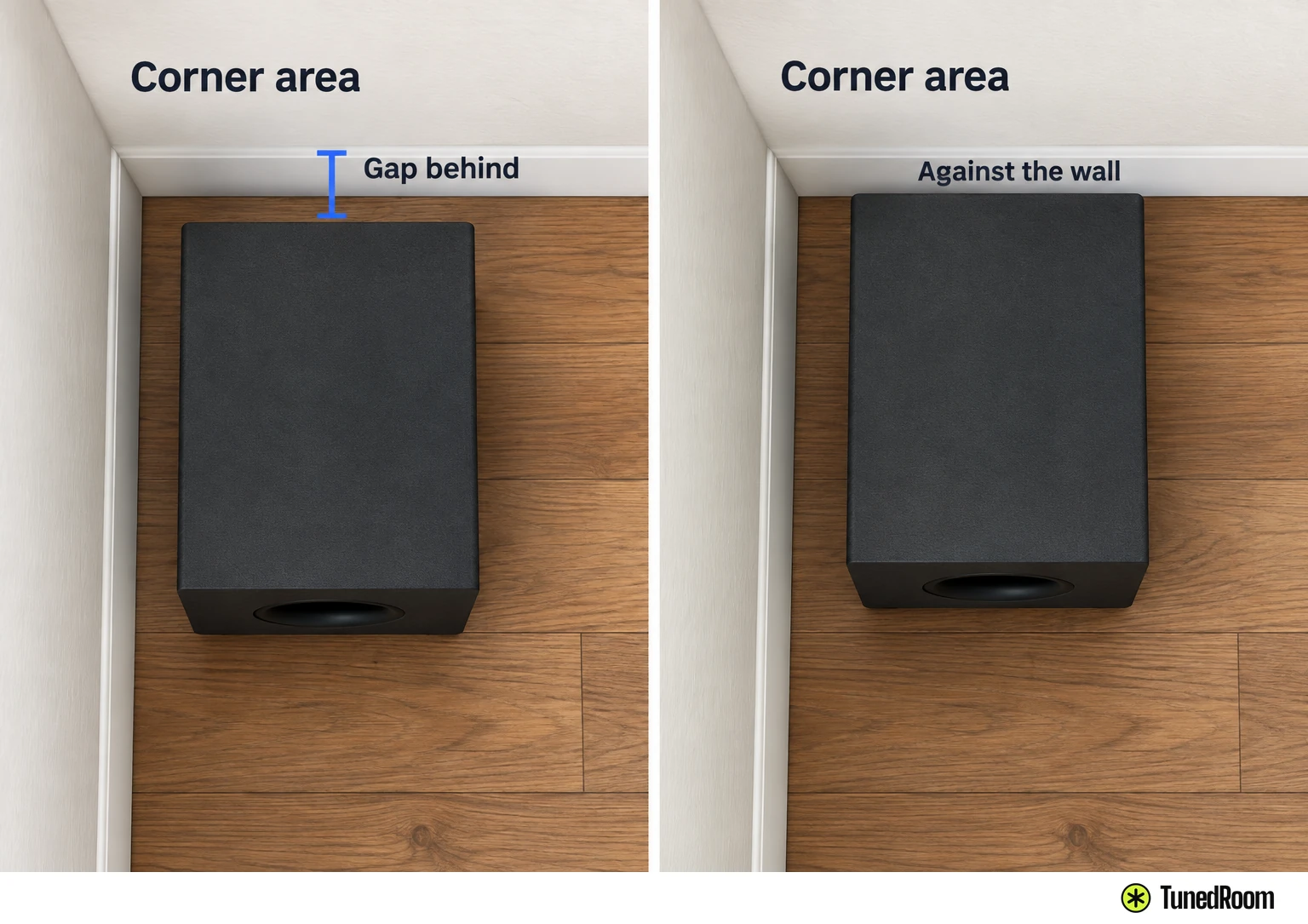
The stronger-bass option and the wall restriction both appear in TCL's Canadian corner-placement advice (opens in a new tab). Keep those instructions together when choosing the position: the aim is bass you like, with enough clarity to make the added weight worthwhile.
Why bass changes around the room
Low frequencies spread more broadly than high frequencies, but they still interact with your room. Sound waves bounce off walls and other surfaces, then combine. Where they reinforce each other, bass can become exaggerated and boomy; where they cancel, you can hear very little bass.
These patterns are called room modes. Low notes have longer wavelengths than high notes, and those wavelengths can match a room's dimensions. That helps explain why moving the same subwoofer changes the listening result even though you're using the same equipment.
Furniture, decor and surface textures also affect how sound is absorbed and reflected. Bose's explanation of room acoustics (opens in a new tab) notes that even arranging the same furniture differently can change what you hear. Your room's layout is part of the sound, which is why comparing locations is useful.
Include your listening seat in the check
Look from the equipment toward the place where you'll actually listen. Keep the path between the soundbar, subwoofer and seating area clear to help the system sound clean and balanced. A location needs to work with the listening area as well as the space immediately around the box.
Sit directly in front of the soundbar for the best left-to-right audio separation. Use that listening position to judge the subwoofer alongside the rest of the system. You're deciding whether the combined sound suits you where you watch or listen, rather than choosing by how the bass sounds beside the sub itself.
Compare the spots your room allows
With your candidate spots checked, test the subwoofer in different suitable locations. TCL recommends this because the change in bass can be substantial. Work with the places your room allows, and let the listening comparison decide which of those positions you keep.
Listen for the result that matters to you. If you wanted stronger bass, judge whether the extra weight is satisfying. If you were correcting muddy sound, pay attention to clarity. Those are different goals, and a position that adds more bass may be less appealing to you than another permitted spot.
Choose the location whose overall bass balance you prefer. The useful outcome of the comparison is a suitable position selected by listening in your room. Once you've settled on that position, you can use the sound controls to bring the result closer to your preferences.
Finish with your available sound controls
Use your soundbar's remote or the TCL Home companion app, if available, to adjust bass levels, sound modes or EQ settings. TCL's Canadian sound-adjustment guidance (opens in a new tab) makes your room and listening preferences the target for these changes.
For the amount of bass, use the bass-level adjustment your system offers. If you want to change the overall sound, try the available sound modes or EQ. Listen to the result and keep the settings that suit your room and the sound you enjoy.
More in this category