Notice what sets it off
- Pay attention to when the sound goes dull, because that tells you where to look.
- Muffled only during calls or chat? Quit the apps using your headset's mic and listen again.
- One earbud quieter? Check the balance setting, then look for debris on the mesh.
- Changed after a new cable, new tips or cleaning? Start with that change.
- If your hearing stays muffled after you take the headphones off, stop and get medical care right away.
“Muffled” can mean a lot of things, but the moment it started is a real clue. We'd pin that down before changing settings or shopping for new headphones, because a call starting, one quieter earbud and a moved cable each send you to a different check below.
Sudden hearing loss (opens in a new tab) can come on all at once or over a few days, and it's a medical emergency. For the equipment checks, play a passage you know well at a comfortable volume and change one setting or connection at a time, so you can tell which change made the difference.
Find what the muffling follows
If nothing obvious set it off, swap one thing at a time and go back to your usual setup between swaps.
Start with the recording. Play a different song you know in the same app, and if only the first one sounds dull, look at that recording before you blame the headphones. Next, play the same song in another app if you can, and if it's clearer there, check the first app's sound settings.
Then try the headphones with a different compatible phone or computer, if you have one. Note any adapter, app or connection that changes along with it, since any of those could explain a difference.
Finally, try another compatible pair of headphones on your original device. If the problem goes away, focus on your original headphones and their connection.
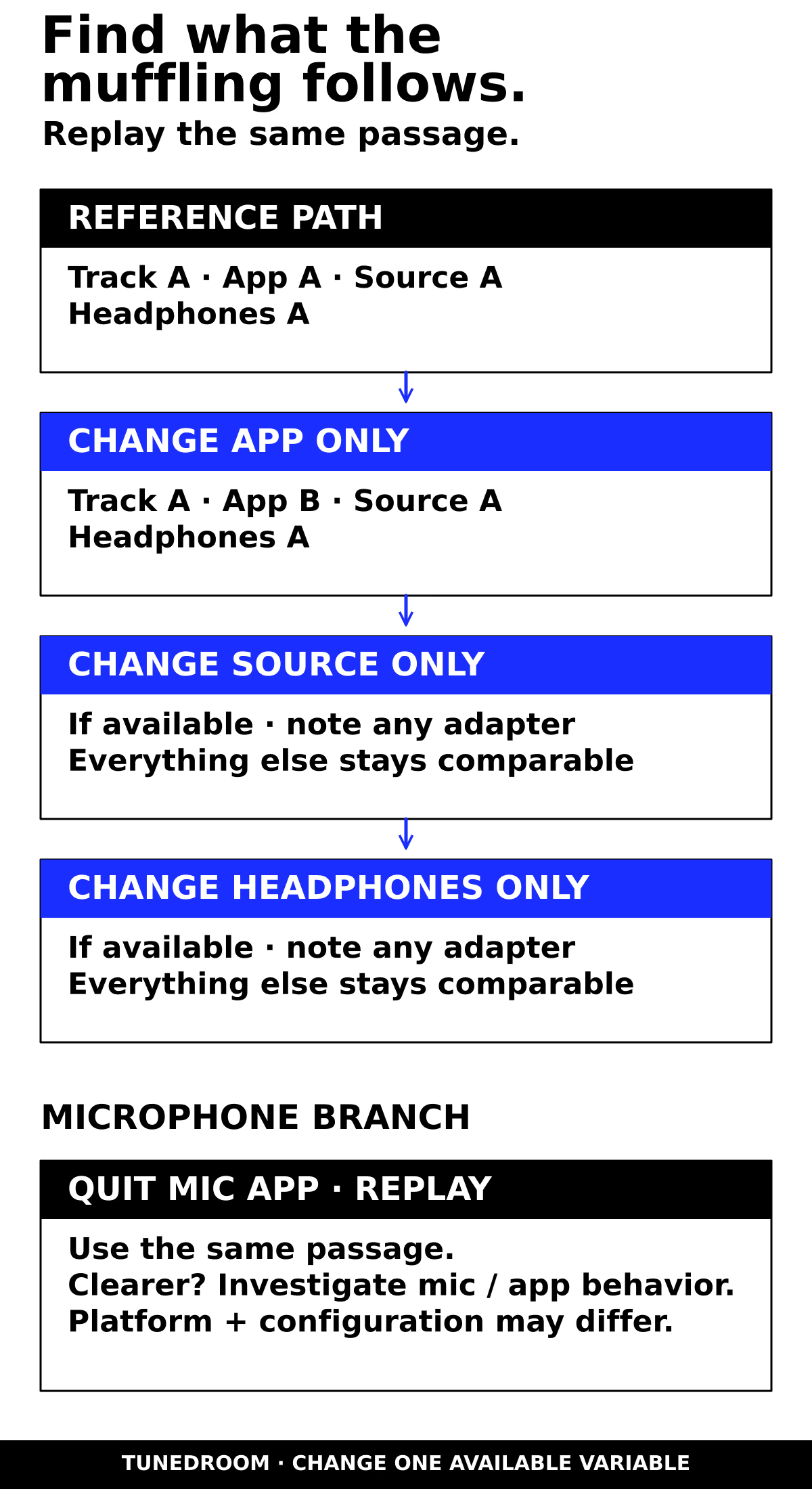
No spare gear? Start with other recordings, microphone apps and sound effect settings. A clearer result there tells you what to check next.
Music goes dull when the mic is in use
On a Mac, using your Bluetooth headphones' microphone can switch them into a mode for talking and listening at the same time, which lowers sound quality and volume. To get the listening quality back (opens in a new tab):
- Quit any apps using the headphones' microphone, including video meeting and chat apps.
- Close System Settings (or System Preferences) if it's open to Sound, then play your audio again.
- Still dull? Open Control Center > Sound, pick the Mac's internal speakers, then switch back to your Bluetooth headphones and listen again.
If it clears up once the mic app is closed, the call or chat setup is the thing to look at.
Windows 11 has an exception: with Bluetooth LE Audio, compatible setups can play stereo while the mic is on. LE Audio needs Windows 11 version 22H2 or newer, compatible Bluetooth LE hardware and an audio codec, and the manufacturer's LE Audio drivers for both. Your headset has to support LE Audio too, so look for LE Audio or TMAP in its specs.
To check your PC, go to Settings > Bluetooth & devices > Devices > Device settings and make sure Use LE Audio when available (opens in a new tab) is on. If that switch isn't there, the PC doesn't support LE Audio right now, which can come down to hardware or drivers. Go by that switch, whatever the Bluetooth label on the PC says.
Stereo while the mic is on asks for more: Windows 11 version 24H2 or newer (build 26100.4484 or newer), Bluetooth LE support built in at the factory, manufacturer drivers that support LE Audio stereo, and compatible LE Audio headphones.
- Pair and connect the LE Audio headphones, then open Settings > System > Sound and select them under Output.
- Expand Output settings > Format (opens in a new tab). Under “Format when microphone is active,” choose Stereo (2 channels) if it's there. Supported systems use stereo by default.
- If stereo makes the sound drop out or glitch badly, switch to Mono (1 channel).
- If the microphone-active setting is missing, install the latest Windows and manufacturer driver updates, then contact your PC maker about support.
If mono audio is turned on under Settings > Accessibility > Audio, stereo may not work properly. Leave it on if you use it for your hearing.
Only one earbud is quieter
We'd check the balance setting before you pull off any ear tips, because a setting is something you can put straight back. For AirPods on an iPhone or iPad, go to Settings > Accessibility > Audio/Visual > Balance (opens in a new tab). Note where the slider sits, then center it, unless it's set that way on purpose for your hearing.
Play the passage again, and put an intentional setting back when you're done.
Next, look for debris on the speaker and microphone meshes, which means taking the tips off AirPods Pro first. Grip each tip near its base and pull straight out with steady pressure. To put it back, line up the oval connector and push until it clicks.
Found debris? Clean it using the instructions for your exact model and surface. If the meshes look clear and balance makes no difference, move on to the app and source checks before you decide the speaker is damaged.
Only one app or device sounds wrong
Jot down your current settings before you change anything. Turn off one effect at a time, replay the passage, and switch it back on if it didn't help. Leave alone anything you use for hearing access.
In the Spotify desktop app, click your profile picture > Settings, and under Playback, turn Equalizer (opens in a new tab) off for now. EQ changes bass and treble, but it can't change the sound while Spotify Connect is playing on another device. On an Android phone with a built-in equalizer, changes you make there also affect other apps.
On Windows 11, open Start > Settings > System > Sound, select your headphones under Output, then select Audio enhancements (opens in a new tab) and turn them off. Play something to test.
If Bluetooth audio distorts or drops out, play music stored on the device itself (opens in a new tab) with the device within a few feet of you. If that sounds clear, keep the device close with no walls or floors in between, and try a spot with less wireless interference. Then try streaming again, because that first test changed both the distance and the audio source.
The sound changed after moving a cable
On an iPhone or iPad, update the software and restart once if you haven't already. Then look for debris in the headphone port and check the cable, connector, remote and earbuds for wear or breaks. Plug an undamaged connector firmly back in (opens in a new tab), taking the case off if it's in the way.
On the Sony WH-1000XM5 and WH-1000XM5SA, use only the supplied cable, with its L-shaped plug in your phone or player. Push it in until it clicks, because the sound may not come through properly if the plug isn't connected correctly. Bluetooth doesn't work while the cable is connected.
These Sony headphones can play wired music with the power off (opens in a new tab), but noise canceling won't work then. Turn them on for noise canceling or Ambient Sound Mode, and keep the power the same, on or off, while you compare wired playback.
The sound changed after changing tips or cleaning
AirPods Pro tips need a comfortable seal for proper bass and noise cancellation. Use tips made for your generation, and if you can't get a good seal, adjust the AirPod or try a bigger tip. Go smaller if a tip feels too big or uncomfortable.
- With your AirPods Pro in and connected to an iPhone or iPad, open Settings > Bluetooth and tap More Info next to them.
- On Pro 1 or Pro 2, choose Ear Tip Fit Test (opens in a new tab), which needs iOS or iPadOS 13.2 or later. On Pro 3, choose Acoustic Seal Test, which needs iOS or iPadOS 26 or later.
- Tap Continue, then Play. If it suggests a change, reposition them and test again, then try another tip size. You might need a different size in each ear.
Before you clean, check which model and which surface you're dealing with. Apple's wet mesh-cleaning method covers only certain meshes on AirPods Pro 2 and Pro 3, so follow the full illustrated cleaning steps (opens in a new tab), including the materials and rinse order.
Afterward, let the AirPods dry completely for at least two hours before you wear them or put them in the case. That two-hour wait belongs to this cleaning method, so don't use it as a drying time for other spills.
Who to contact if it's still muffled
If the problem follows your original headphones through every comparison, contact the company that made them. For no sound, or sound from only one side, on an iPhone or iPad, try a second pair first. If the second pair works, contact the maker of your original headphones, and if it doesn't, contact Apple Support.
Tell them the exact headphone model, what you're playing from, whether it's wired or Bluetooth, which side is affected, when it started and which comparisons helped. Mention whether mic use, a cable move, new tips or cleaning came right before it, and ask for an estimate before you approve any service.
More in this category
Keep following the signal
Elsewhere on the desk