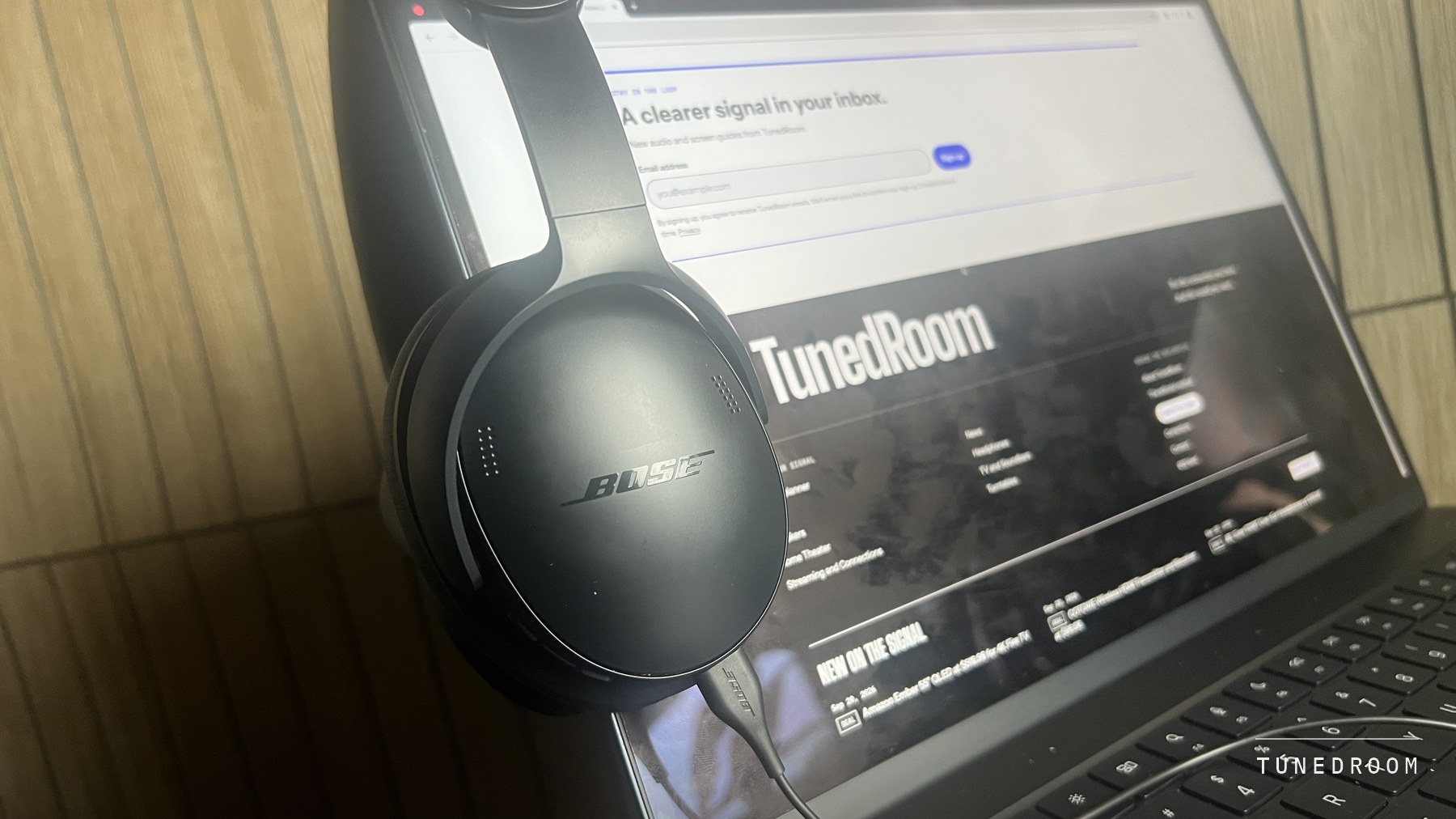
A Week With Both Signal Paths
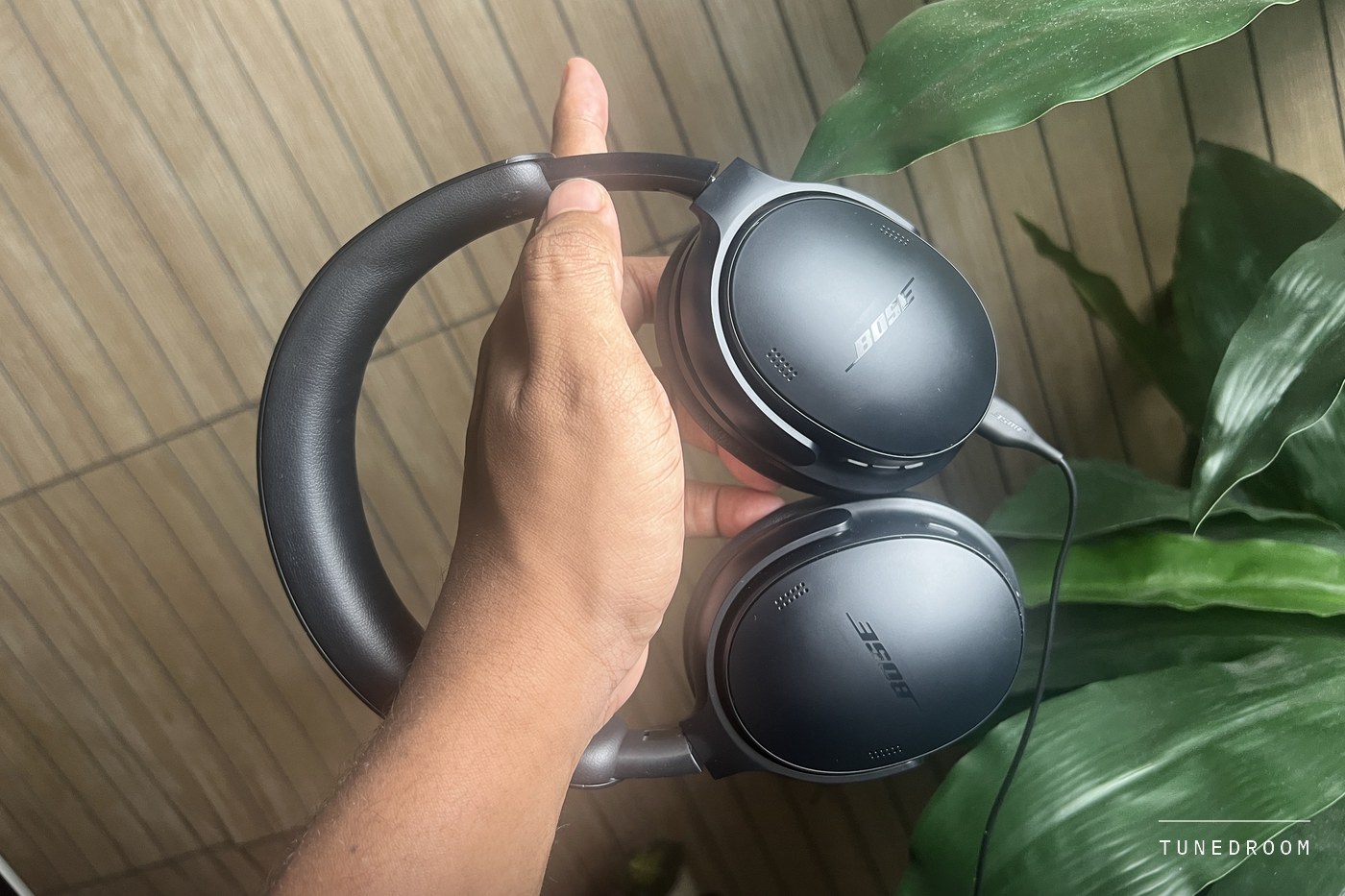
Bose sent me a black pair of the QuietComfort Headphones (2nd Gen) and I wore them for a week, which was long enough to work out that they are really two products sharing one headband. There is the wireless pair you take out of the house, and there is the wired pair you plug into a laptop at a desk. They do not sound the same, and for the first time in this line the cable is the better one.
- Price
- $359
- Wired audio
- Two-way USB-C, lossless in up to 24-bit/48kHz
- Bluetooth
- 5.4 with multipoint, SBC and AAC only
- Battery
- 24 hours, or 18 with Immersive Audio running
- Weight
- 230 g
- Tested
- One week on a Bose-supplied black unit
That is the thing worth leading with, because it is not how headphones normally work. The wire used to be the compromise, the thing you dug out when the battery died. Here the wire carries lossless 24-bit audio and the radio carries AAC, and once you have heard the gap you start planning around it.
I tested them the way I actually listen. Desk work with the cable in, walking and traffic on Bluetooth, video on a laptop and a phone, calls across several days and rooms, and enough hours in a row to know what the clamp feels like by the evening. Everything below comes out of that week.
The USB-C Cable Is the Best Thing Here
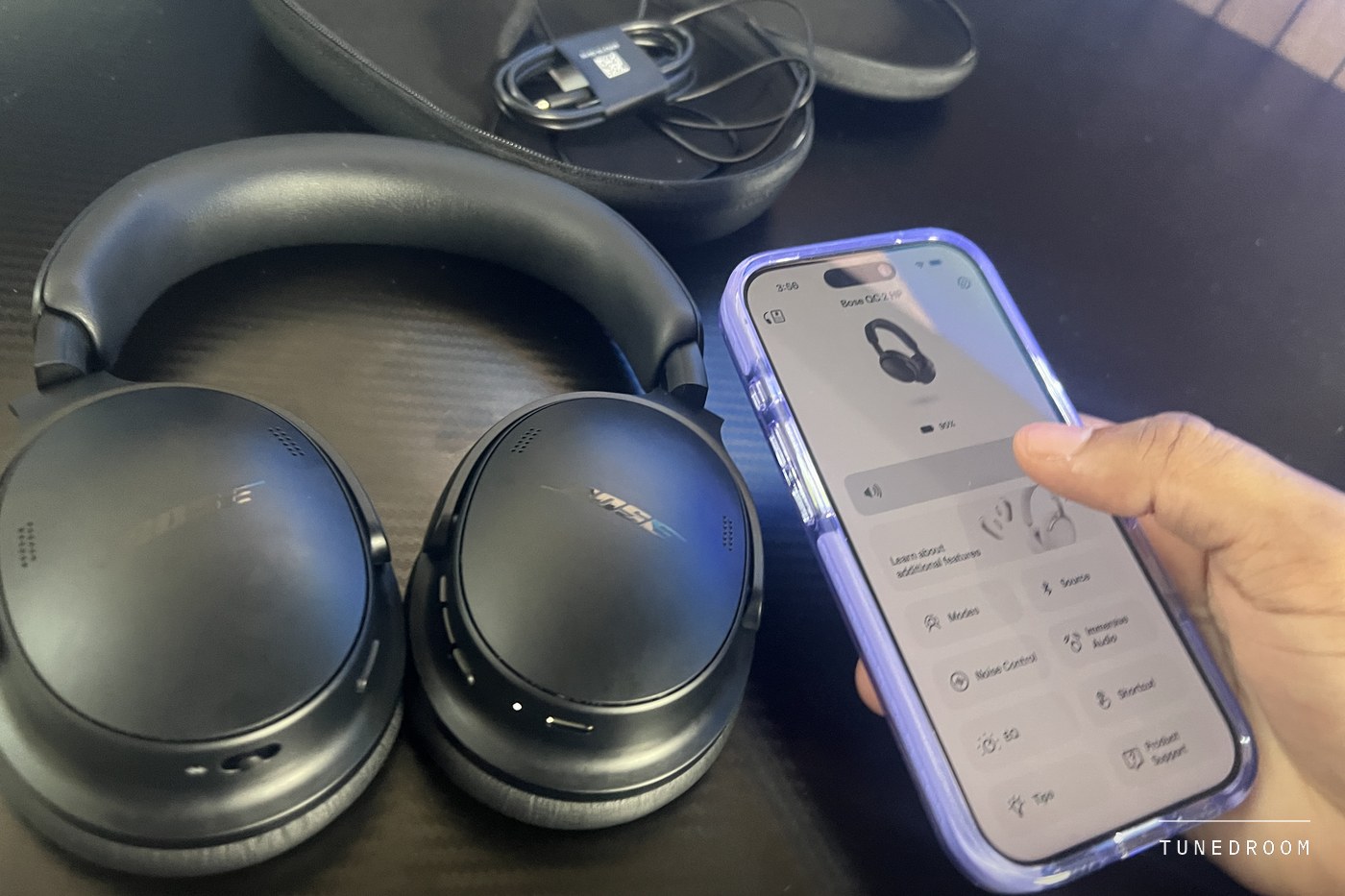
Two-way USB-C audio used to be a QuietComfort Ultra feature. Bose moved it down to the $359 pair, and it is the single change that most alters what these headphones are good for. Plug the included cable into a laptop or a phone and the headphones take a digital signal directly, lossless, up to 24-bit and 48kHz.
The first time I switched mid-track from Bluetooth to the cable, the difference was not subtle. Depth that Bluetooth flattens comes back. Detail that compression smooths over stays where it should be. Instruments that were sitting on top of each other separate out. On material that rewards it the change is immediate, and going back to wireless afterwards feels like turning down a light.
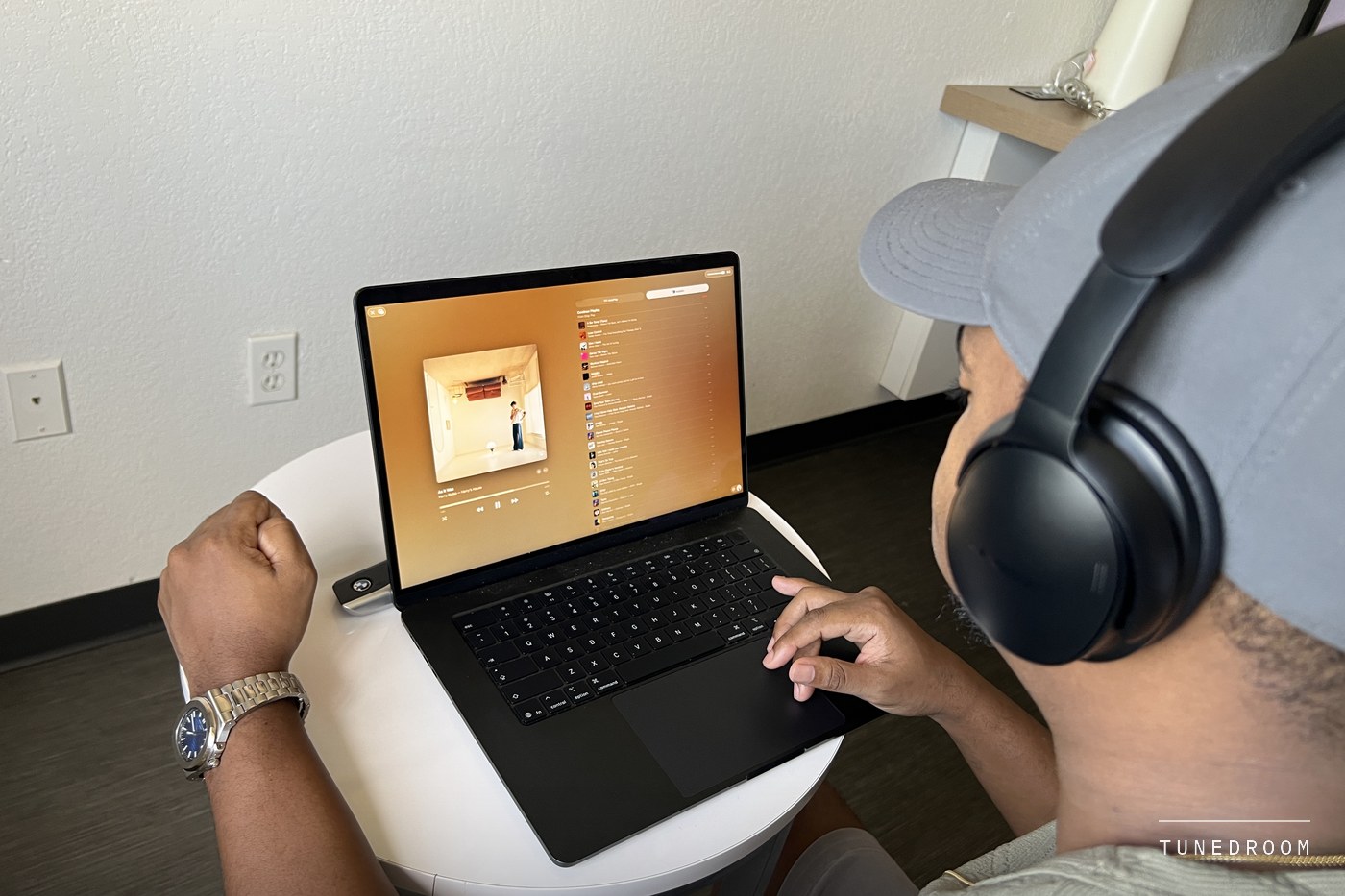
It runs in both directions, so voice goes out at up to 24-bit/16kHz on the same cable, which matters more than it sounds if you spend your day in meetings on a laptop. And you can listen while the headphones charge over that same connection, so the desk position is not a trade between playing and topping up. You plug in once and both things happen.
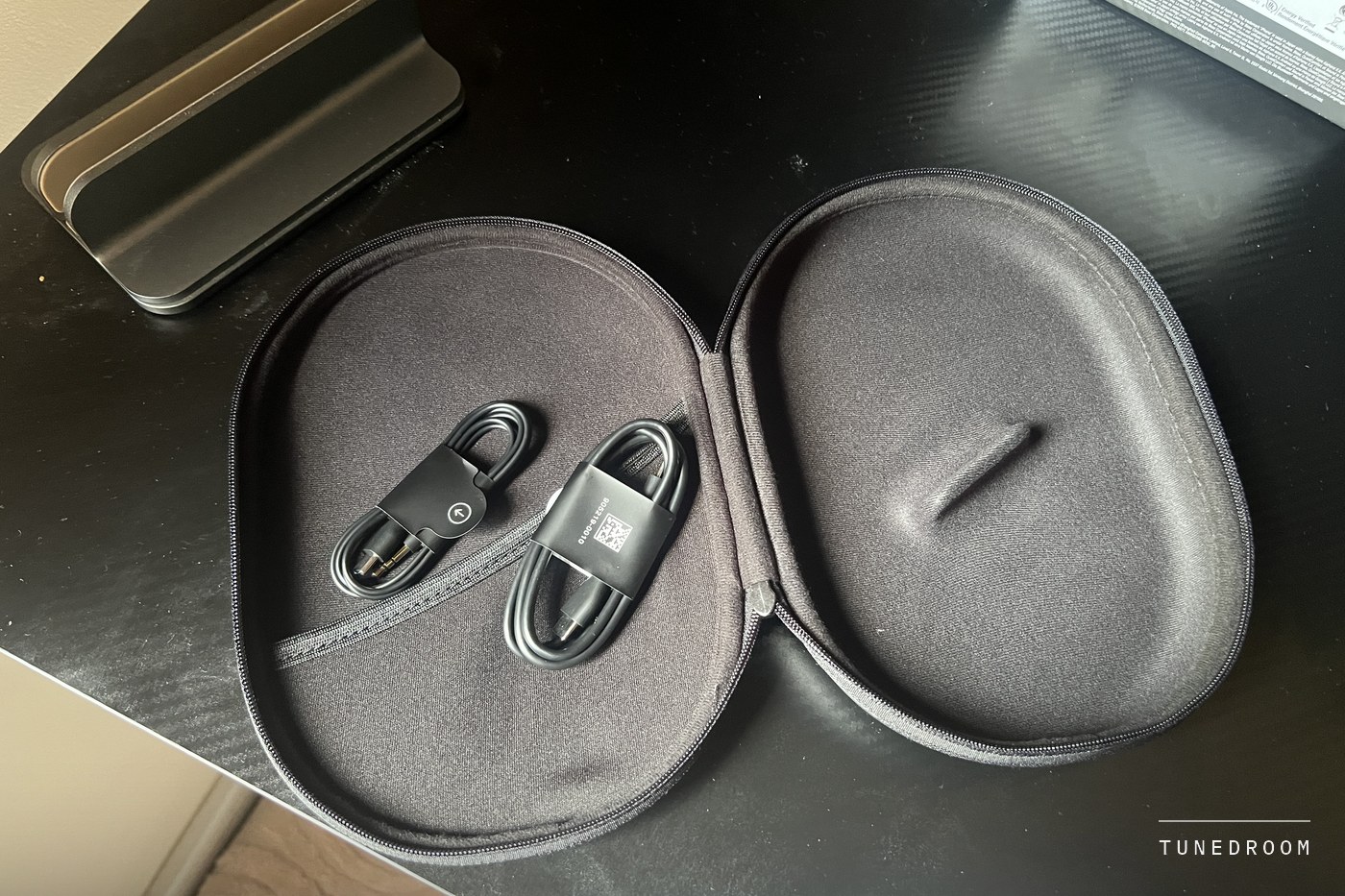
There is a smaller thing in the box worth a mention, a USB-C to 3.5 mm cable. There is no analog jack on the headphones themselves, so that cable is how you reach an aeroplane seat or an older receiver. Between the two cables the wired story here is more complete than on most wireless pairs.
Over the Air You Are on AAC and That Is the Whole Story
Now the other half. Wirelessly these support SBC and AAC, and nothing else. No aptX, no LDAC, no hi-res path over Bluetooth at any price. On a $359 pair in 2026 that is a real omission, and it is the reason the cable matters as much as it does.
In practice AAC is fine. It is not thin or unpleasant, and on a walk with traffic around you it is more than the environment deserves. But it is a ceiling, and you can hear where it sits as soon as you have heard the same track down the wire. If your listening is mostly untethered, you are buying the lesser half of these headphones and paying full price for both.
What Bluetooth does get right is the connection itself. Bluetooth 5.4, Google Fast Pair on Android, and multipoint across two devices at once that actually works. I kept a laptop and a phone connected all week, and switching between a video on one and a call on the other happened without the dropouts and re-handshakes that make multipoint more trouble than it is worth on cheaper pairs. Range held at the rated distance around the house.
So the honest way to read the spec sheet is this. Bose did not answer the codec question. Bose answered a different question, which is what happens when you sit down, and the answer there is better than a codec would have been.
If you listen at a desk, the missing codecs cost you nothing and the USB-C path is a genuine upgrade over anything in this price range.
If you listen on the move, you never touch the best thing these do, and the Bluetooth side alone does not justify the price over cheaper pairs.
Cancellation That Holds Up on a Moving Street
Any headphones can cancel noise in a still room. The test is a street with traffic on it, and QuietControl passes that test convincingly. Engine noise and road rumble do not get muffled, they get removed. Outdoors, the low wash of a street drops out and what is left is the occasional sharp sound arriving much quieter than it should.
The part I did not expect was how steady it stays. Weaker systems start pumping or hissing when the noise floor keeps shifting, which is exactly what happens when you are walking. This one held its composure through all of it, and the six-microphone array with the updated adaptive control is doing real work rather than sitting on a spec sheet.
A good half of that result is not electronics at all. The oval earcups and the deeper cushions seal well enough to do serious passive isolation before any microphone gets involved, and the two halves working together is why the effect feels more complete than the cancellation spec on its own suggests. Cancellation is a signal problem, and the first stage of the signal chain here is a physical one.
Aware mode is the transparency setting and it is good without being the best. Voices come through clearly with none of that plugged-ear pressure, but it reads slightly processed next to the most natural transparency I have used. ActiveSense sits behind it and ducks sudden spikes, so a siren going past does not arrive at full level.
Glasses No Longer Cost You the Seal
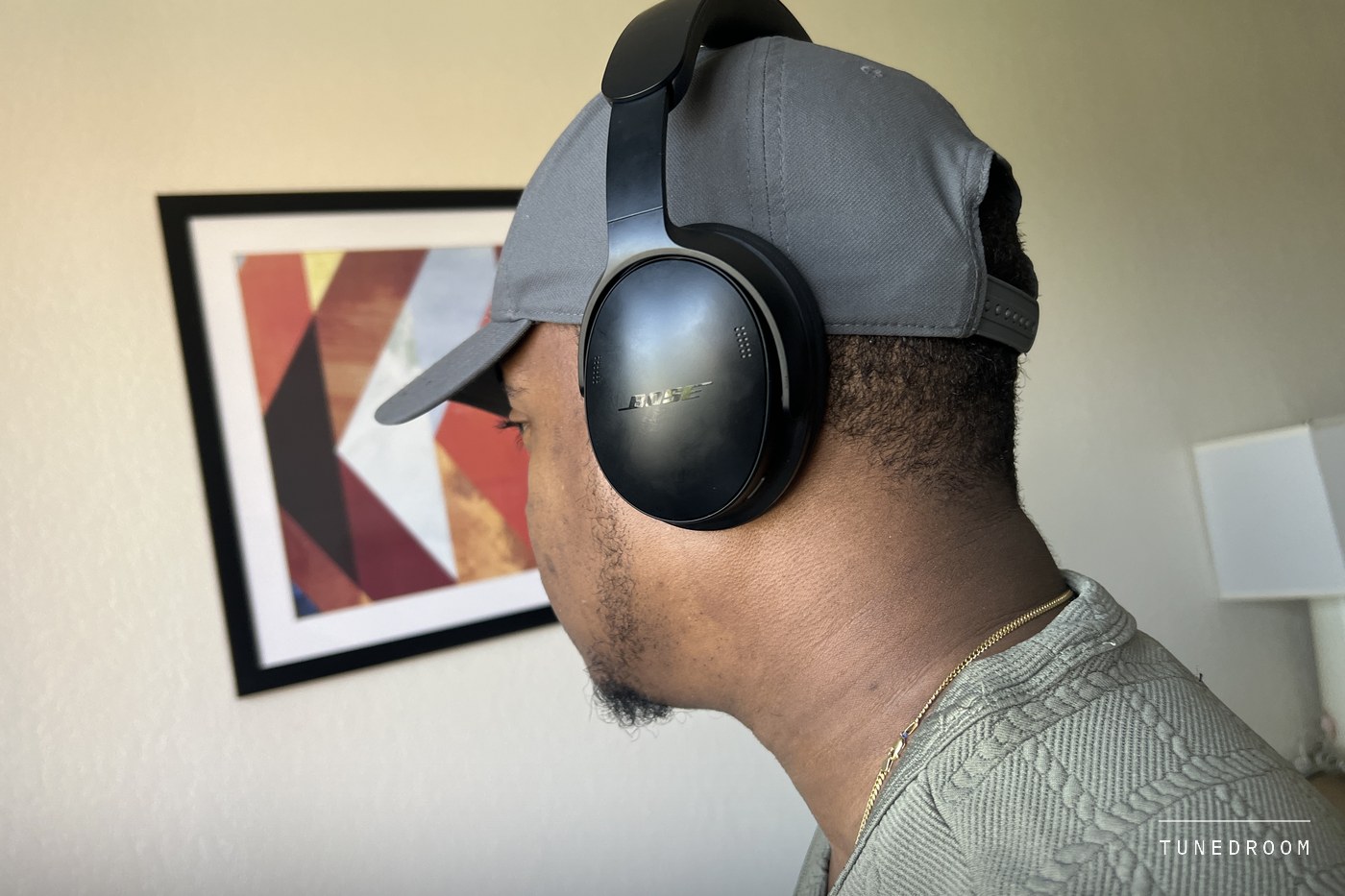
This is the change I would put in front of anyone who wears glasses, because it is the rare marketing line that survives contact with daily use. Temple arms break the cushion seal where they pass over your ears, and on most headphones that gap costs you a noticeable slice of the cancellation.
Bose has the six-microphone system compensating for that gap, and in a week of wearing glasses with them I stopped thinking about it. The drop was small enough that I could not reliably pick it out by ear. There is presumably a limit, and thick frames or a hat pushed down over the band will still cost you something, but as implemented this is a real fix rather than a bullet point.
It belongs in a section of its own because everything downstream depends on the seal. Spatial processing, bass response and the cancellation figure all assume a closed cup, so fixing the most common cause of an open one improves every other number on the page at the same time.
TrueSpatial Sounds Like a Room Rather Than an Effect
Immersive Audio was the other Ultra feature Bose brought down to this model, branded TrueSpatial, with Still, Motion and Cinema modes. I want to be careful here, because spatial audio is the most divisive thing in headphones and plenty of people switch it on, feel nothing, and never touch it again.
That was not my experience. It does not sound like processing draped over a track. It sounds like the music stopped happening inside my head and moved out in front of me, wide and placed, with the sense of space you get from actual speakers in an actual room. On the right material it is genuinely absorbing rather than clever.
Still mode fixes that stage in place, which is the one I settled on. Motion anchors it to your head so the image follows you as you turn, and that is the mode people either love or find actively distracting. Try it, but do not judge the feature on it. Cinema is the one to show a sceptic, and it gets its own section below.
The cost is battery. Running Immersive Audio takes you from 24 hours to 18, which is still a full day but is a real trade, and it is presumably why Bose put the mode button on the earcup instead of burying it in a menu.
Standing In for the Living Room After Everyone Is Asleep
This is the use that interests me most and the one a headphone review usually skips. Late at night the choice is normally between watching something quietly enough to keep the house asleep and not watching it at all. A pair of headphones with a competent spatial mode is the third option, and Cinema mode is built for exactly that.
What it does differently from the music modes is pull dialogue forward to the centre while spreading effects wide. That is the correct priority, because dialogue is what you lose first when you turn a system down, and it is what most spatial processing smears. On a laptop and on a phone the difference on a film or an episode was immediate, and it is the mode I would point at if someone asked me whether any of this is worth switching on.
Be clear about what I did and did not try, because the gap matters. I ran Cinema mode from a laptop and a phone, both over Bluetooth and over the USB-C cable, and both worked well. I did not pair them to a television, and I would not assume that path is as good. Television Bluetooth is inconsistent between sets, lip sync is a genuine problem on many of them, and none of the cancellation or spatial work here changes that.
If you want these to replace a living room system after hours, the reliable route stays out of the television's Bluetooth stack entirely. Feed them from the streaming device or laptop you are playing from, over the cable where you can reach it. That is more true here because the cable is where these are best anyway.
Fit, Buttons and the Things That Wear on You
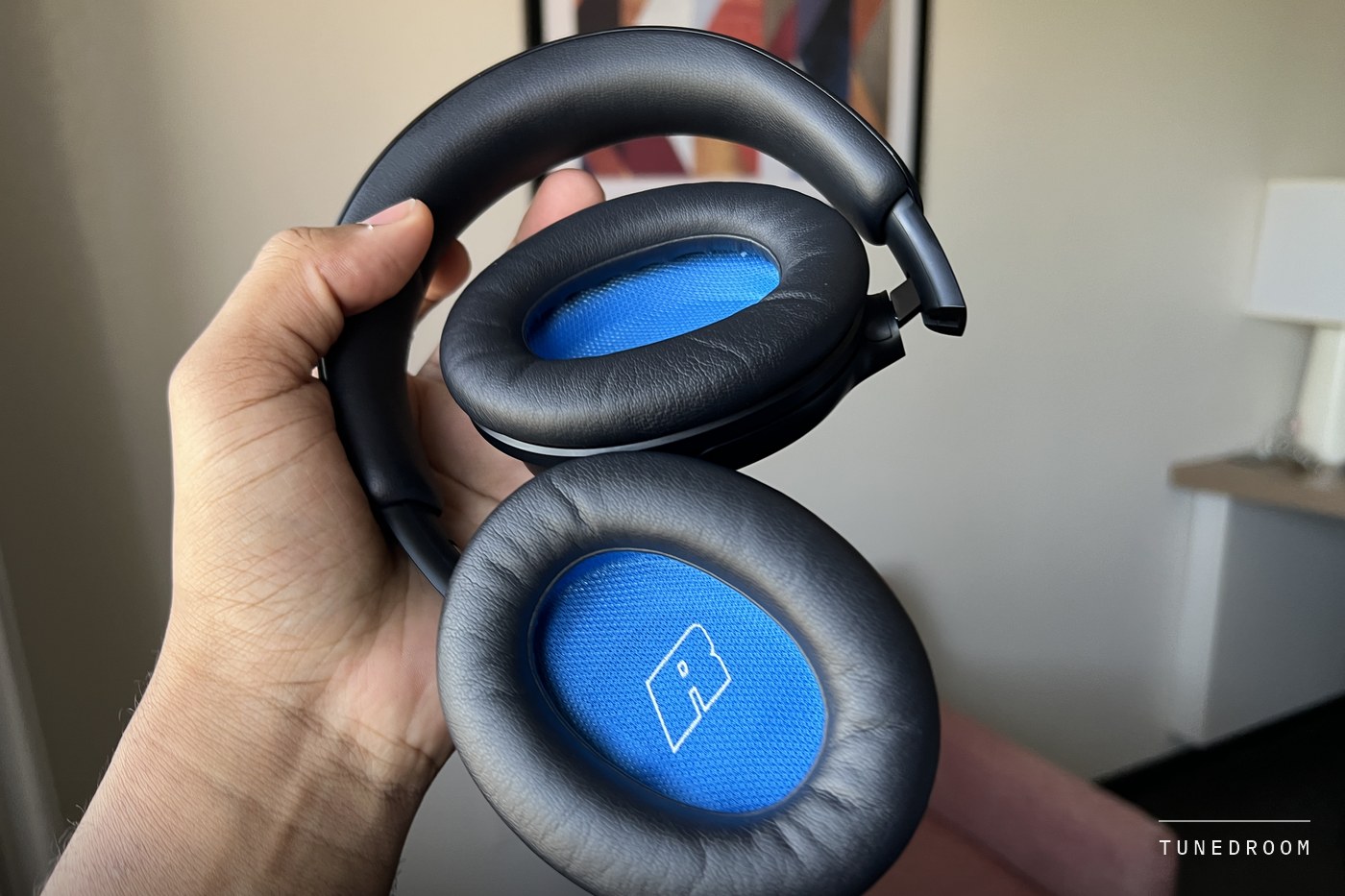
Comfort is the reason this line has the reputation it has, and this generation earns it again. The headband is wider with more padding along the crown, so the weight spreads instead of pressing on one strip of your scalp, and the sliders move smoothly rather than in notches, which means you set the fit where you want it rather than choosing between two positions that are both slightly wrong.
The earcups are the bigger change. Oval rather than round, following the shape of an actual ear, with deeper and softer cushions. The result is even pressure the whole way around instead of a pinch at the jaw and a gap at the top. At 230 grams there is nothing pulling at your neck, and the clamping force lands in the narrow band where the seal holds when you turn your head without you counting the minutes until you can take them off.
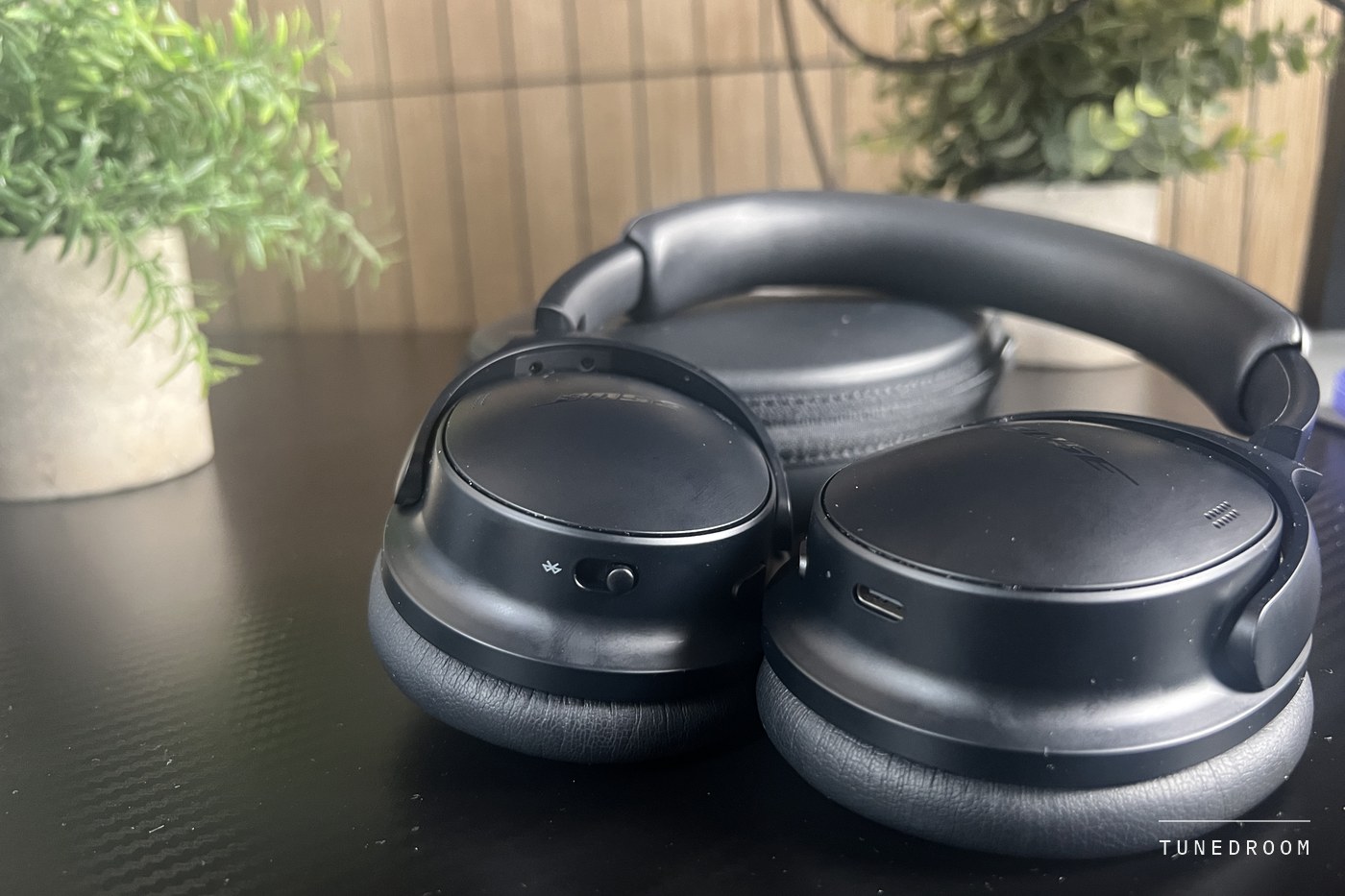
Bose kept physical buttons rather than moving to a touch surface, and after a week I am glad. Volume either side of a multifunction button on the right cup, power and pairing on the left with the mode button beside it. Nothing to learn and no gestures to mis-trigger, and within a day I was working all of it by feel.
Two complaints, both small and both worth knowing before you order. The black finish shows fingerprints and hand oils after an afternoon of normal handling, so one of the lighter finishes is the easy fix if that would bother you. And there is no charging brick in the box on a $359 product, which is a stingy omission even in 2026. There is also no water or dust rating at all, so treat these as desk, commute and travel headphones and keep them away from the gym.
Where a Week Left Me
Calls were the one thing that changed my mind mid-test. On the first call the person on the other end said I sounded like I was across the room, which is a real failure mode on aggressive noise suppression, where the processing that strips the background takes part of your voice with it. Every session after that was consistently good across different rooms and distances and nobody raised it again. Calls are the most conditional part of this product, strong indoors and more variable outdoors with wind.
Battery matched the rating closely enough that I stopped charging them nightly. A full working day of wear does not get near empty, fifteen minutes buys about two and a half hours, and a full charge takes around three.
What I keep coming back to is the shape of the thing. Bose built a pair of headphones whose best performance is only available when they are plugged in, and then did not give the wireless side a hi-res option to compete with it. That is an odd product decision and a good outcome for anyone who listens at a desk, which is most of the people I would recommend these to. Judge them on where you listen, not on the spec sheet, and the answer gets clear quickly.
At a desk these are the easiest recommendation in the price range. Lossless over the cable, cancellation that survives a real street, a spatial mode that sounds like a room, and a fit you can forget about for a full day.
On the move you are on AAC with no way up, and the case gets much weaker. The Ultra costs $90 more and adds hi-res wireless, which is the upgrade that actually matters if you are never at a desk.
Can I get lossless audio over Bluetooth?
No. These support SBC and AAC only, with no aptX or LDAC, so there is no hi-res wireless path. Lossless is available over the USB-C cable at up to 24-bit/48kHz, and you can listen while charging on the same connection.
Is there a headphone jack?
Not on the headphones. Wired audio goes over USB-C, and Bose includes a USB-C to 3.5 mm cable in the box so you can still reach analog sources such as an aeroplane seat or an older receiver.
Do they work properly with glasses?
Yes, better than most. The six-microphone system compensates for the seal gap that glasses arms create, and across a week the drop in cancellation was small enough that I could not pick it out reliably by ear. Thick frames or a hat will still cost you something.
Are they good for watching television at night?
Cinema mode is excellent for video and pulls dialogue forward where you want it. I tested that from a laptop and a phone rather than from a television, and pairing headphones directly to a TV brings its own lip sync problems that have nothing to do with these. Feed them from your streaming device or laptop instead.
How do they compare with the QuietComfort Ultra?
The Ultra costs $90 more and adds slightly stronger cancellation, a more premium build and hi-res wireless audio. Immersive Audio and USB-C lossless used to be the Ultra's reasons to exist and both are here now, so most of the gap has closed unless you specifically need hi-res over Bluetooth.
More in this category