A Month With Nothing in My Ears
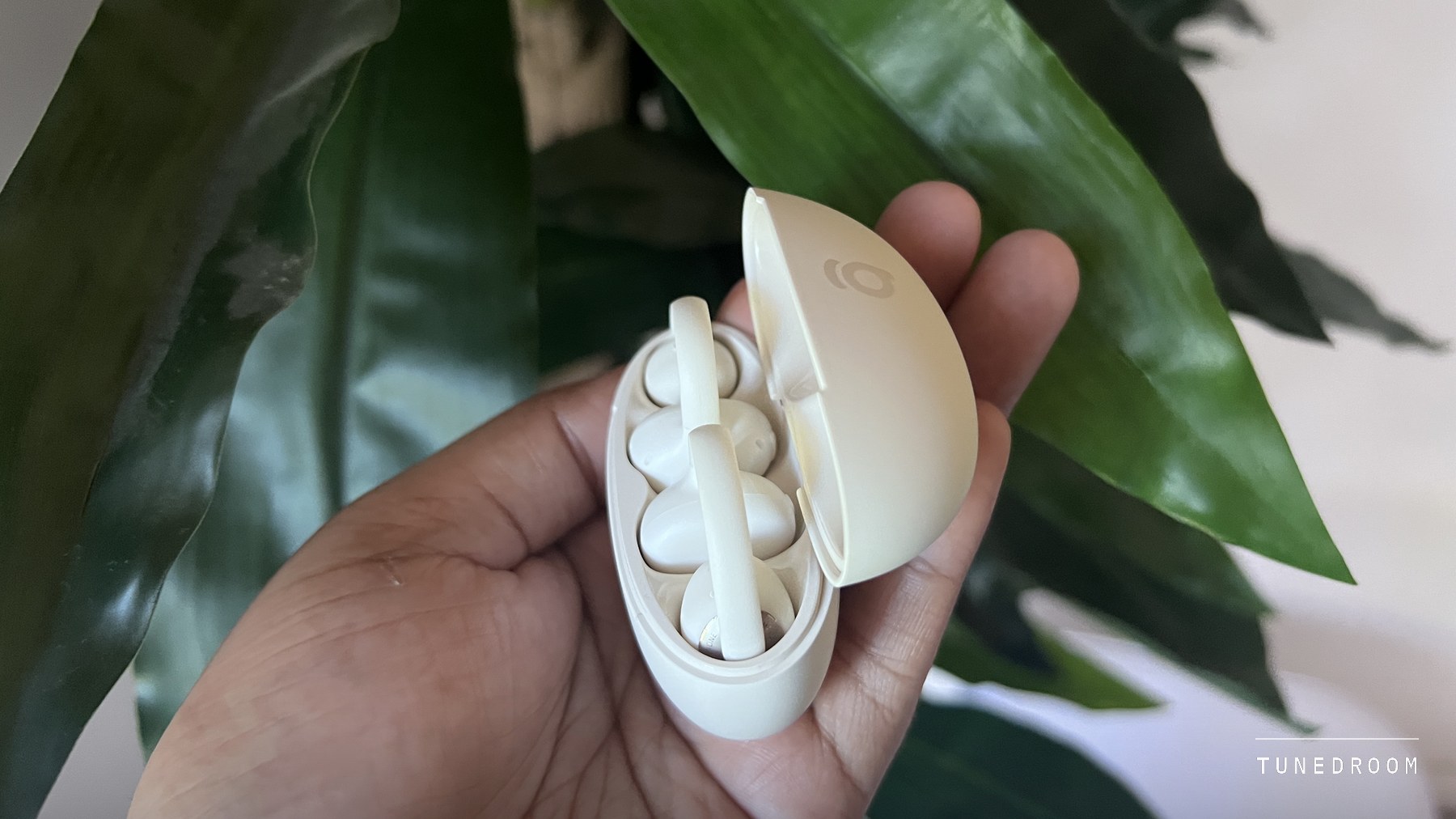
Baseus supplied a pair of the Bowie MC2, and I wore them for about a month of ordinary days, through desk work, walks, errands and the odd run. They are clip-on open-ear buds. The speaker sits at the entrance to your ear canal rather than inside it, and nothing seals.
- Design
- Clip-on open-ear, nothing in the ear canal
- Drivers
- 11 mm tri-magnet dynamic, one per ear
- Codecs
- SBC, AAC, and LDAC on Android
- Bluetooth
- 6.0, multipoint across two devices
- Battery
- About 11.5 hours with Bass Boost on, 55 with the case, by Baseus's rating
- Water
- IP67 on the earbuds, not the case
- Weight
- 5.1 g per earbud
- Tested
- About a month on a Baseus-supplied pair, model A0102F
Most headphone reviews take the seal for granted and judge the sound inside it. These have no inside. The music and the room arrive at your ear together, so the questions worth asking are what an open design costs as sound, what it gives you in return, and which rooms it suits. The answer depends more on the room than on the earbuds.
Some of what follows comes from wearing them and some from Baseus's manuals and published acoustics research, and I will say which is which.
What a Seal Does That These Do Not
A sealed earbud or a closed ear cup does three quiet jobs. It traps low frequencies in a small closed space, where bass is easiest to hear. It blocks part of the room before any electronics get involved. And it keeps your music to yourself. Take the seal away and all three go at once.
The seal also does something people notice and dislike. Block the ear canal and the low-frequency part of your own voice, carried through bone, builds up inside it, so you sound unnaturally boomy to yourself. Audiologists call it the occlusion effect, and opening the ear is the only real cure. It is why open designs suit long days and phone calls.
Physically there is little to feel. Baseus puts each earbud at 5.1 grams, and I wore them through a full morning of work without wanting a break. They are earbuds you actually leave in while the house carries on around you, which is why the rest of this matters.
Fit Is the Bass Control
Bass on these is a matter of millimetres. Nudge the speaker slightly closer to the entrance of your ear canal and the low end fills in. It took me a day or two of fiddling to learn where they sound best, after which it became automatic, but it is worth a moment every time you put them in.
Baseus's quick start guide says to wear them with the buttons up and the sound outlets lined up with your ear canal openings, fitted close, and that a proper fit improves volume and sound quality. There is physics behind it. Each earbud has an acoustic vent as well as a speaker outlet, and research on vented open-ear designs shows the low end strengthening close to the source, so a small change in distance is an audible change in bass. That matches what I heard.
A C-ring of flexible titanium wire holds the speaker in place, and the silicone air cushions come in medium, large and extra large, with medium fitted from the factory. A few people tried them on and the fit held across different ear sizes. Once I had the knack they never came off by accident, runs and pulling on a shirt included.
In a Quiet Room They Sound Bigger Than They Are
With the fit right and the room quiet, these sounded better than a pair with no seal should. Voices sat naturally in the mix, the detail was clean, and with Bass Boost on, which Baseus brands SuperBass 3.0, the low end carried real weight. The app's bass modes make a difference you can hear.
That is the open design working for them. In a still room, or outdoors away from traffic, they sounded open and airy, which is what a small speaker at the mouth of your ear ought to sound like with nothing sealing it. Nothing competes, so you need little volume, and they held together at every level short of the top of the range.
A quiet room is also where the codec can matter. On Android, Baseus lets you switch on LDAC, which Sony built to carry up to 990 kbps, about three times what standard Bluetooth SBC sends. An iPhone stays on AAC. That extra data is fine detail, the first thing background noise covers, so if you are going to hear it on an open design it will be at home with the house quiet. I did not run a codec comparison, so treat that as where to listen rather than a result.
Hearing the House While the Music Plays
This is where the open design becomes the reason to buy. With nothing in your ear canal, the house reaches you much as it would with no earbuds at all. A knock at the door, a child calling from upstairs, the kettle clicking off, someone talking from the doorway. It arrives mixed with the music rather than filtered out, and there is no mode to switch on first.
How much of it you hear is set by your volume, not the earbuds. Every step up covers a little more of what you left your ears open to hear, so if the doorbell or a child is the point, set the level with the house in mind. A simple check is whether you can still follow someone speaking from the next room.
The desk is the other place they make sense. I kept them connected to a phone and a laptop at once, and switching between the two stayed smooth all month, without a dropout I can remember. In a quiet room callers said I sounded clear, and with the ear canal open, your own voice does not boom while you talk.
Where the Room Wins
The same openness works against you anywhere loud. Beside heavy traffic or in a strong wind, the noise around me overpowered the music and I found myself turning it up to compensate. Baseus's own guidance says as much, that in a busy place the outside competes with your music. It is the price of everything in the last section.
Turning up is where the second problem starts. Near the top of their range the sound tightens and loses some of its poise, so a busy road pushes you toward the range where they are least at ease. Calls follow the same pattern, clear indoors and noticeably less so in wind or real noise.
The bigger cost is to your hearing. The World Health Organization puts safe listening at 80 decibels for up to 40 hours a week, falling to four hours a week at 90, and its advice for noisy places is well-fitted, noise-cancelling headphones so you do not have to raise the volume. An open design cannot follow that advice. On a loud commute, a sealed pair gives you more music at a lower level.
At home, at a desk or on a quiet street, the open design is the feature, and the sound gives up surprisingly little for it.
On a loud commute, the room drowns the music, the volume climbs toward where these strain, and a sealed pair with cancellation is the right tool.
The Quiet Bedroom Is the Hardest Room
The one exception at home is the quietest room in the house. Sound from an unsealed speaker does not all stop at your ear. Acoustics research on small open-ear headphones calls their leakage significant enough to make them less suited to public spaces, and at night a bedroom with someone asleep in it is less forgiving than any train, because nothing covers what escapes.
Baseus says its enlarged anti-blocking vents relieve reflection waves to reduce leakage and focus the sound on your ear, but it publishes no leakage figure. The research shows why venting can help. Sound released from behind the driver in opposite phase cancels at a distance while holding up at your ear, the same near-field behaviour that makes the fit so sensitive.
I did not test how much of my music reached anyone else, so here is how to find out before it matters. At your usual volume, have someone sit where they will be, a pillow's width away or across a desk, and ask whether they can follow the song. If they can, turn it down or use something sealed after dark.
The Opposite of the Bose QuietComfort
The second-generation Bose QuietComfort Headphones I reviewed here earlier answer the same question the other way. Their over-ear cups seal, the cancellation removed the low roar of a moving street rather than muffling it, and they are built to take the room away. Even their awareness mode is the opposite. The Bose rebuilds the room with microphones and plays it back, and I found that good but slightly processed. Here nothing is rebuilt. The room reaches you through the air, as natural as the room itself, and it cannot be turned off.
So they are not rivals. The Bose is for the commute, the flight and the loud office, where the room is the problem. The MC2 is for the house and the desk, where the room is worth keeping, at a small fraction of the price, and plenty of people would be well served by one of each.
Buttons, Battery and the App
The controls are physical buttons on top of each earbud, so brushing your hair or resettling the fit triggers nothing. Baseus maps one press to play and pause, two to the next track and three to the previous one, with a long press on the right for volume up and the left for down. Finding the button by feel took me a few days, and pressing it can shift the earbud slightly, so a quick reseat afterwards is a good habit on a design where position sets the bass.
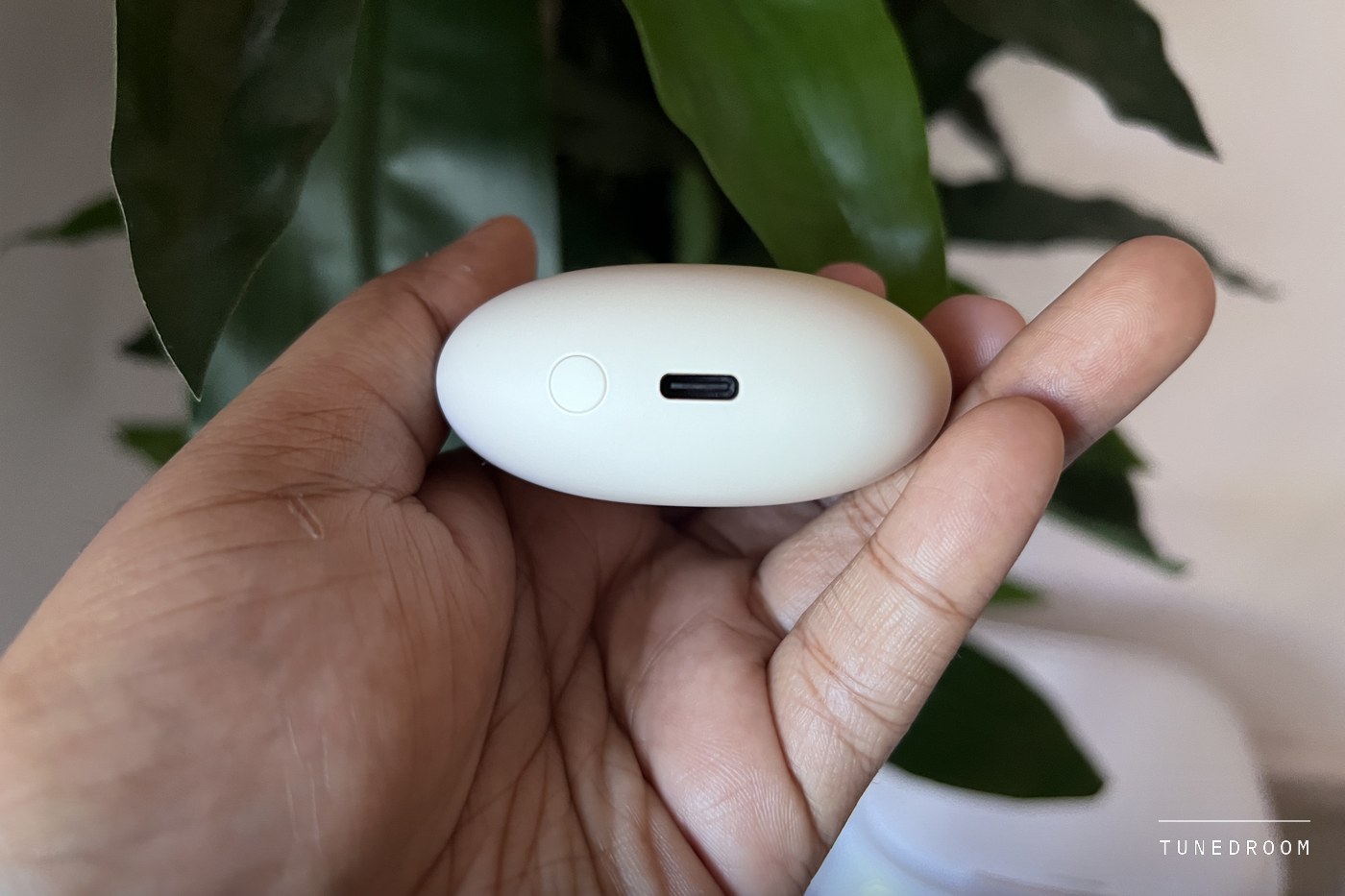
Battery hardly featured. With Bass Boost left on for most of it, the month took only a handful of charges. Baseus's rating is about 11.5 hours a charge with Bass Boost on at half volume, about 55 with the case, and ten minutes of charging for about three hours of play.
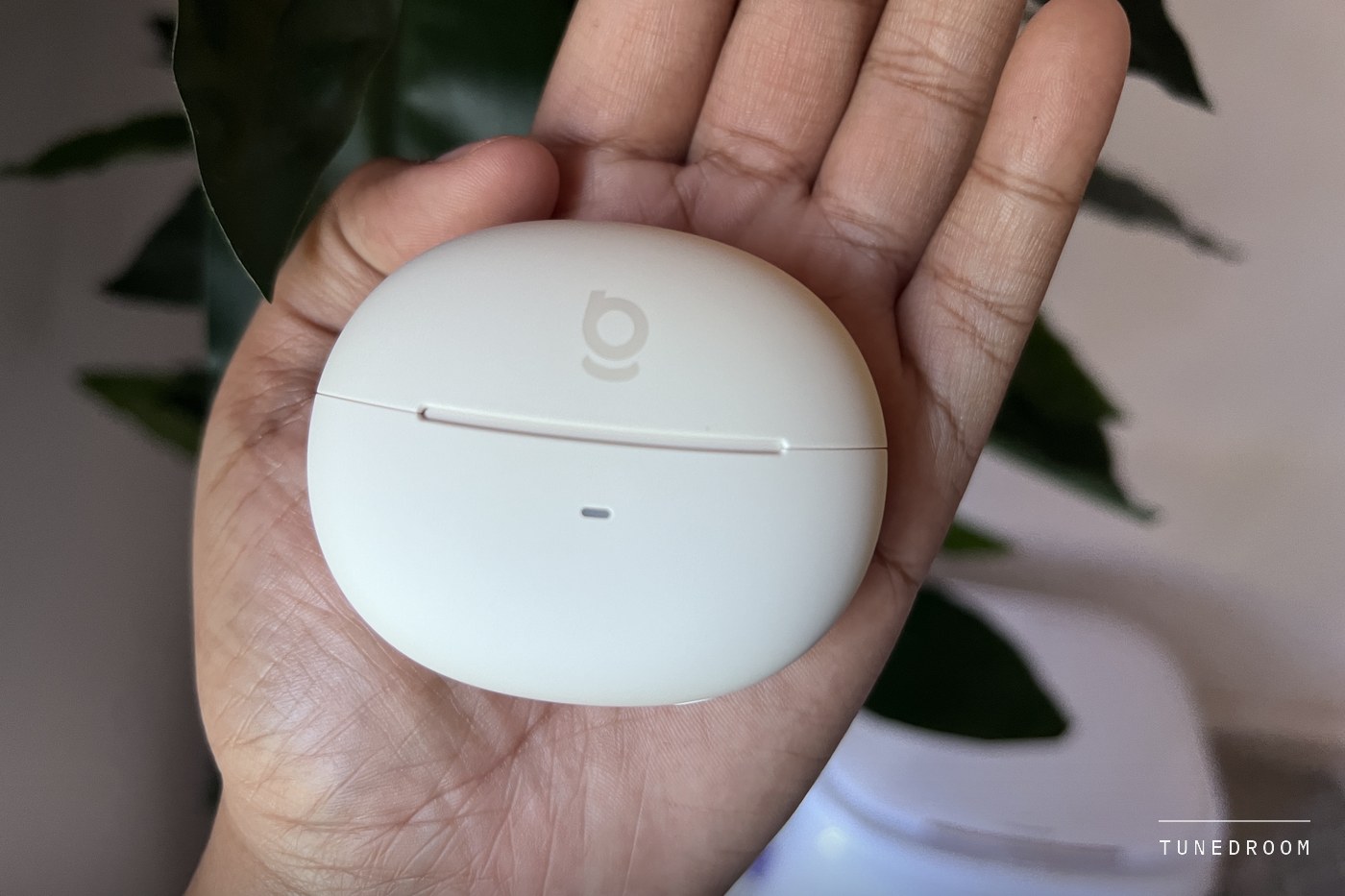
The Baseus app is quick and uncluttered, with eight EQ presets and a custom curve, bass and spatial modes, a low-latency mode for games and remappable controls, and firmware updates went through without trouble. The AI translation and note features need a second app, Tuya. The rounded case is slippery to pull from a pocket, and only the earbuds are rated IP67, so keep the case dry.
The Rooms I Would Wear Them In
After a month, the way to decide on these is to picture where you will wear them. In a quiet room they sound full and open, well beyond what the missing seal suggests, and the house still reaches you. In a loud one they are outmatched, and the only fix, more volume, pushes them toward the edge of their range and your ears toward the wrong side of safe listening.
That makes them easy to recommend to someone at home or at a desk who wants music and the room at the same time, and who owns a sealed pair for the loud parts of life or rarely meets them.
Buy them for the house, the desk and the quiet street. A minute on the fit pays back in real bass, multipoint held steady all month, and the battery barely needs thinking about.
It scores 8.5 because the open design caps bass and isolation, the sound tightens near full volume, and LDAC reaches Android phones only. Within those limits it does its job very well.
Do open-ear earbuds have less bass than sealed ones?
Yes, because nothing traps the low frequencies in your ear canal. On these, moving the speaker slightly closer to the ear canal brought out more bass and Bass Boost helps, but they will not match a sealed pair.
Can people near me hear what I am playing?
Some sound escapes from any open design. Baseus says its vents reduce leakage, but I did not measure it, so check with someone sitting where they will be, at your usual volume.
Does LDAC work with an iPhone?
No. LDAC is available on Android, where Baseus lets you switch it on. An iPhone connects over AAC.
Is there active noise cancellation?
No. Baseus says the MC2 has no sound insulation and no active noise cancellation. Letting the room in is the point.
More in this category