Deal with dust before you listen
- Start with a carbon fiber brush to remove surface dust.
- For fluid cleaning, use an industry-approved record cleaner and microfiber, followed by a dry microfiber cloth.
- Care between plays matters too: handle records carefully, use inner sleeves and store them upright.
If you've pulled out an album and can see dust on it, we'd deal with that before playing it because the stylus can drag debris through the grooves and carry it onto other records. Brushing addresses that dirt before it reaches the part of your setup that reads the music.
Airborne dust and accidental finger contact mean even a carefully kept collection needs cleaning. Pay particular attention to used records, whose previous handling and cleaning may have been uneven. Regular care helps preserve their appearance and sound, while the way you handle and store them contributes to how well they last.
Choose your materials before opening the sleeve
Gather your supplies before taking the record out of its sleeve, so it spends less time exposed while you get ready. For this manual routine, the brush and cloths do different jobs. Have the finishing cloth ready alongside the one you'll use with fluid.
- A carbon fiber record brush for surface dust.
- An industry-approved record cleaning fluid.
- A microfiber cloth for the fluid wipe and a dry microfiber cloth for remaining particles.
Victrola uses the broad wording “cleaning fluid of your choice,” while Fluance specifies industry-approved cleaners (opens in a new tab). We'd follow Fluance's narrower restriction because harsh chemicals can dull the record's surface and affect audio quality. Keep your choice within cleaners intended and approved for records, rather than treating Victrola's wording as permission to use any household liquid.
Hold the edge and label
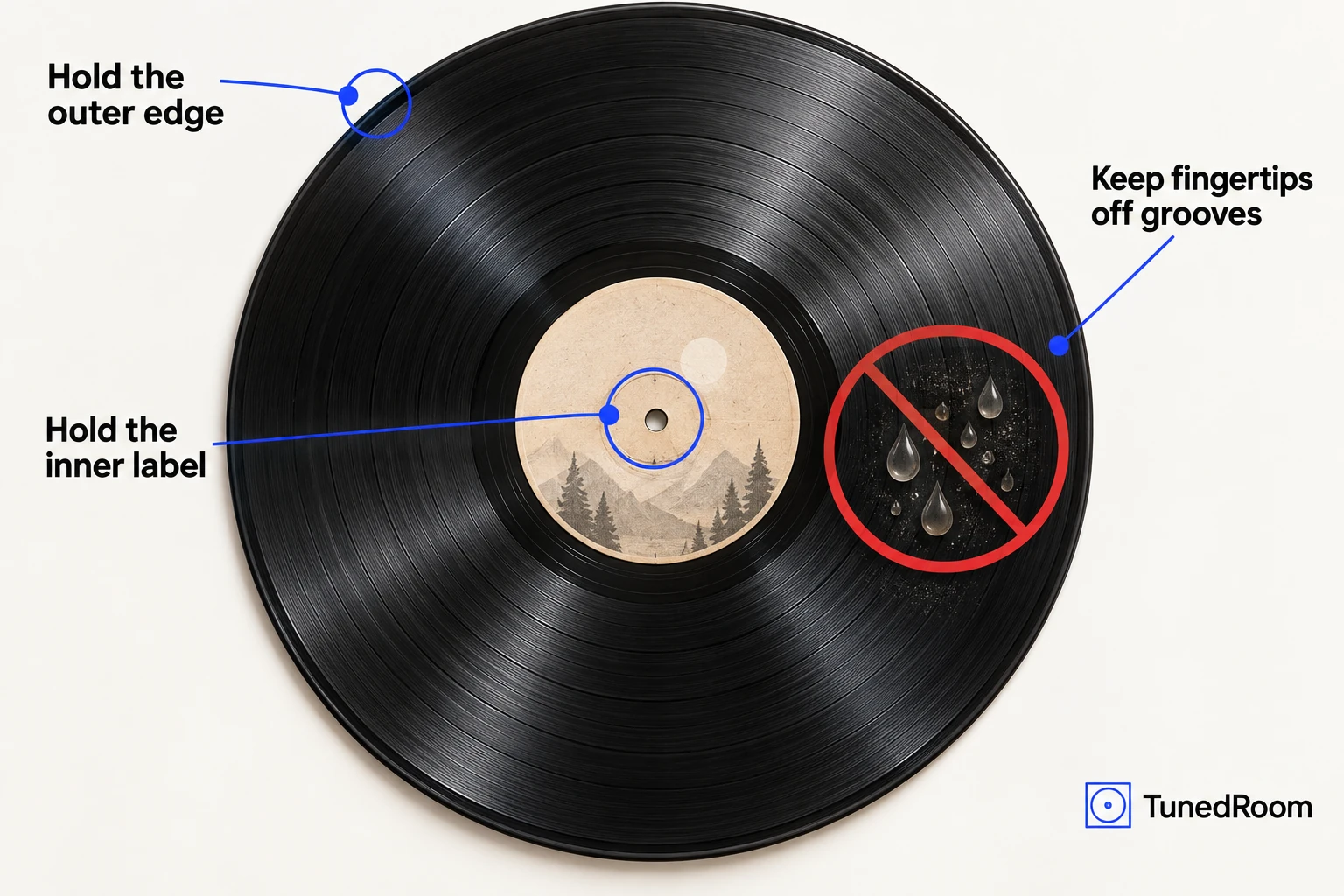
Pull the entire inner sleeve out of the jacket first, then slide the record out horizontally. Support it by its outer edges and inner label as you move it toward the player. Those are your handling points throughout cleaning and the transfers between storage and playback.
Keep your fingertips off the playing surface, even with freshly washed hands. Your skin's natural oils can tarnish the vinyl and attract dust and dirt, which stick to the oil and work farther into the grooves. Washing your hands doesn't remove the need to hold the record in the right places.
Fingertips also pose a scratch risk, and damage to the grooves can affect the sound. The edge-and-label handling method (opens in a new tab) protects against both problems: oil left behind and scratches from contact. Give a freshly cleaned record the same careful grip you'd use when first taking it out.
Let the record turn beneath the brush
Place the record on the player and let it spin while you gently hold the carbon fiber brush over its surface. Keep your fingers clear of the grooves while the record moves beneath the brush. This is Fluance's brushing technique (opens in a new tab), with gentle contact as the record turns.
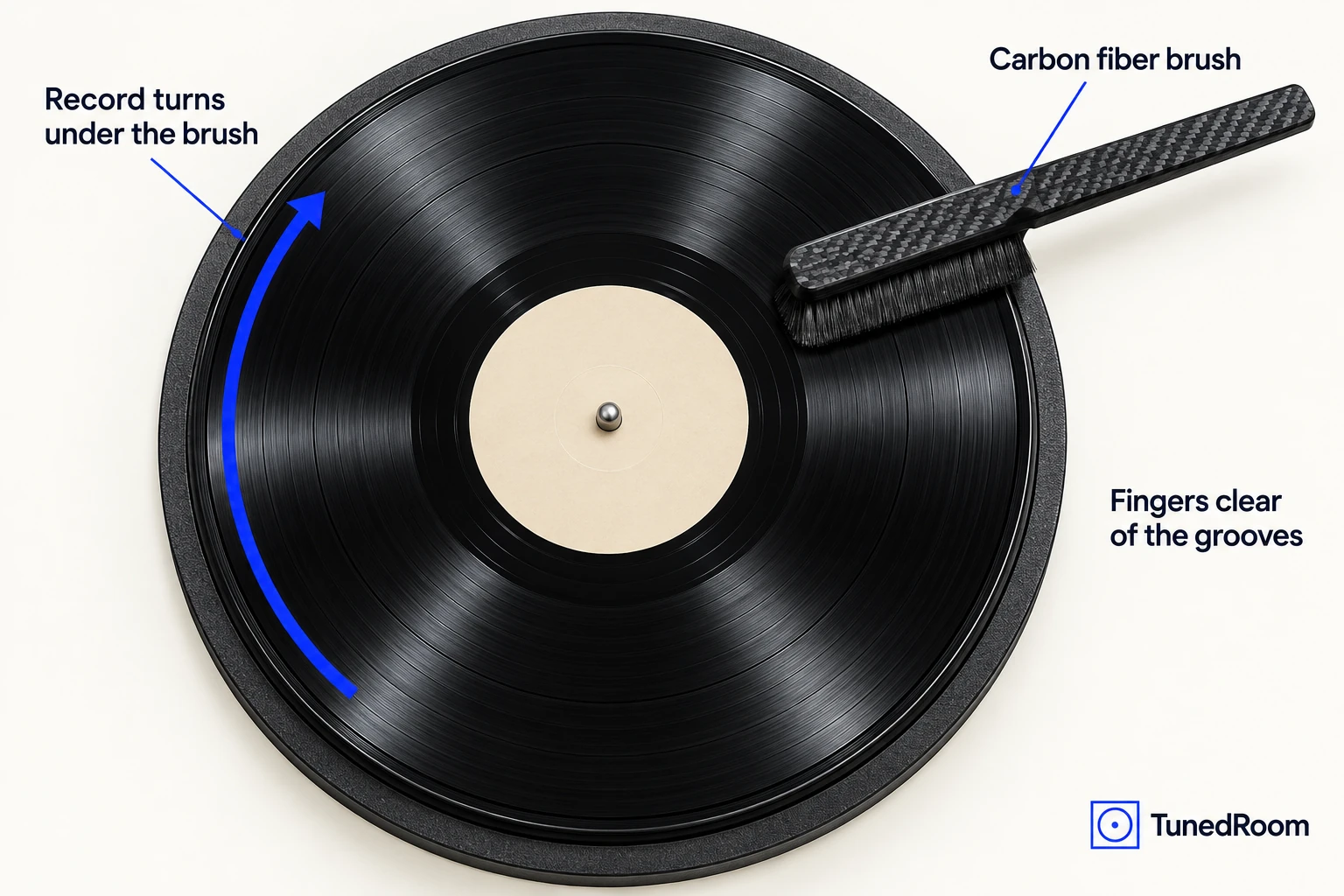
The brush removes surface dust and lowers static electricity, making it harder for dust and dirt to settle into the grooves. Victrola recommends this as the first cleaning step, ideally before and after each use. That gives brushing a place in your listening routine instead of leaving it until the collection looks neglected.
Particles in the grooves can reduce sound quality, contribute to skipping and cause further damage. Surface dust is therefore worth addressing even when your main concern is what you hear. At this stage, the practical result to look for is the removal of loose dust from the surface.
Finish the fluid wipe with dry microfiber
For the fluid stage, wipe the record with your chosen record cleaner and a microfiber cloth. Don't substitute a towel or T-shirt: built-up lint in those materials can transfer into the grooves, and using them may damage the vinyl. The cloth choice matters alongside the liquid you've selected.
After the fluid wipe, follow with a dry microfiber cloth to remove remaining particles. Victrola's cloth-cleaning method (opens in a new tab) gives that finishing pass its own job. The sequence ends with a separate cloth collecting debris left after the cleaning-fluid stage.
Look at the surface as you finish, with attention to the particles the dry cloth is meant to clear. A completed clean should be assessed in terms of removing dust and dirt and helping maintain the record's appearance and sound, not as a guarantee that every playback problem will disappear.
Make care part of listening
Once the record is clean, you can play it or put it away for another day. The benefit of regular cleaning is keeping dirt under control across listening sessions. Careful handling during the moves to and from the player supports that work, because those transfers affect the record's condition too.
For a secondhand purchase, give cleaning particular attention even when you're eager to hear the album. Victrola emphasizes used records because their earlier care can be uncertain. That makes cleaning part of welcoming a record into your collection, alongside looking after the albums you've owned for longer.
Longevity depends in part on how you handle your records, so think beyond the cleaning session itself. The aim is to maintain a record you can enjoy over time. Protective packaging and a suitable storage position carry that care forward when the player isn't running.
Give the record its protective sleeve
Use an inner sleeve as the protective layer between the vinyl and its jacket. Common choices include paper, poly and paper with a poly lining. Victrola says sleeves containing poly help reduce static, while the choice of material comes down to your preference.
Put the record into its inner sleeve before returning the sleeved record to the jacket. Slide it in horizontally under control, and don't drop it into the sleeve or cover. Fluance's sleeve-handling guidance (opens in a new tab) keeps removal and return as deliberate sliding movements.
Minimize the time a record spends outside its sleeve, and return it promptly when you've finished playing and brushing it. If you're choosing extra protection for the collection, Fluance identifies industrial-grade sleeves as an option for protecting records from scratches and artwork from damage. Protecting the packaging matters alongside protecting the playing surface.
Choose an upright home away from sun
Stand your albums vertically alongside one another on a shelf or in a crate. Don't store them flat in a stack: the weight and pressure can bend and warp the vinyl over time. The horizontal movement used when handling a sleeve is different from the upright position needed for storage.
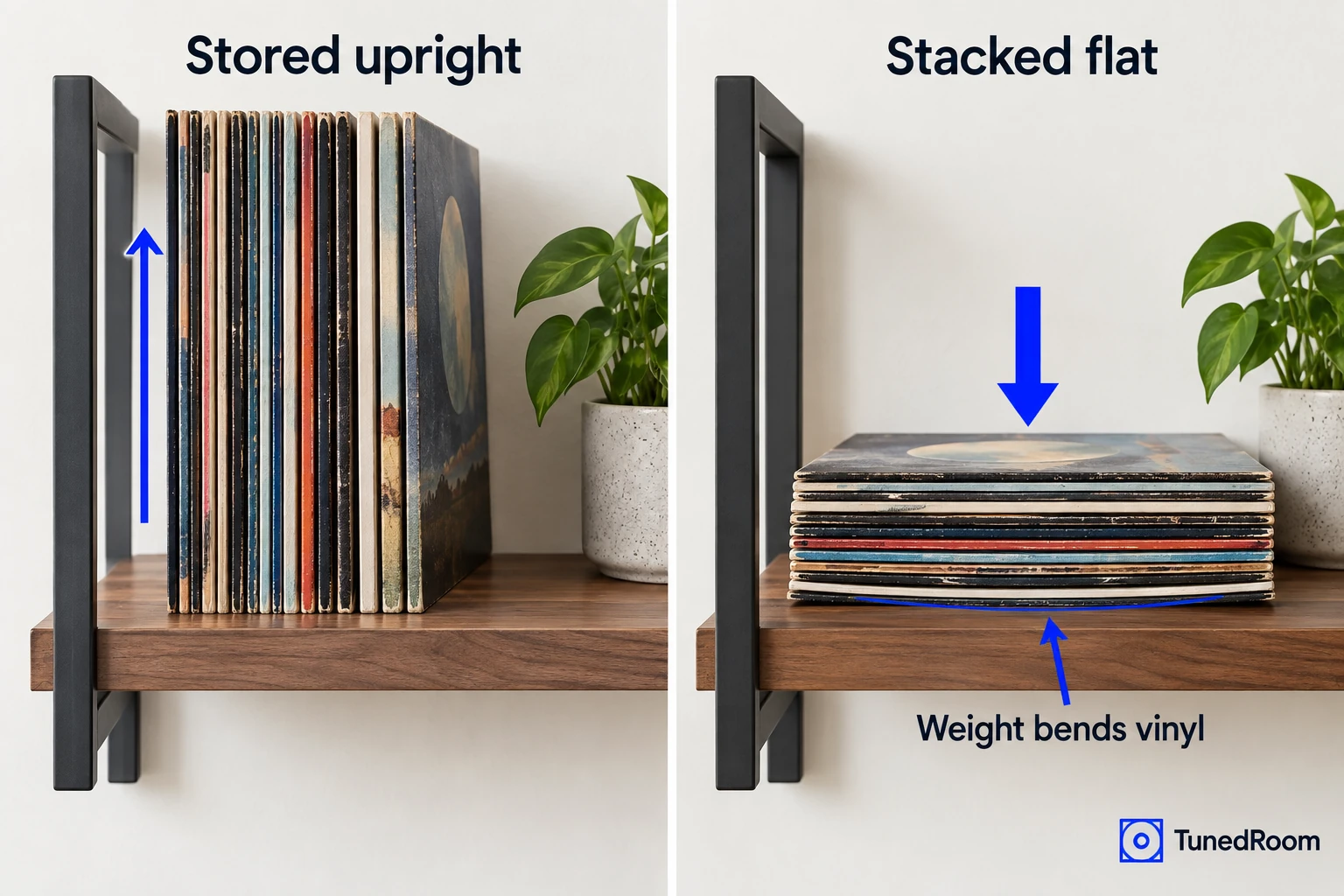
Choose a cool, dry room and keep the collection away from vents, windows and doors leading outside. Fluance's storage guidance (opens in a new tab) connects humidity and sunlight with warping and damage to cover artwork. When choosing where the collection belongs, consider the room as well as the shelf.
Keep direct sunlight off both the records and their jackets. Extended sun exposure can produce temperatures that distort vinyl and fade the artwork, so a window display can work against preservation. Choose a spot out of direct sun where your sleeved albums can remain upright between plays.
More in this category