A Few Weeks With the Cream One, and Four Ways Out
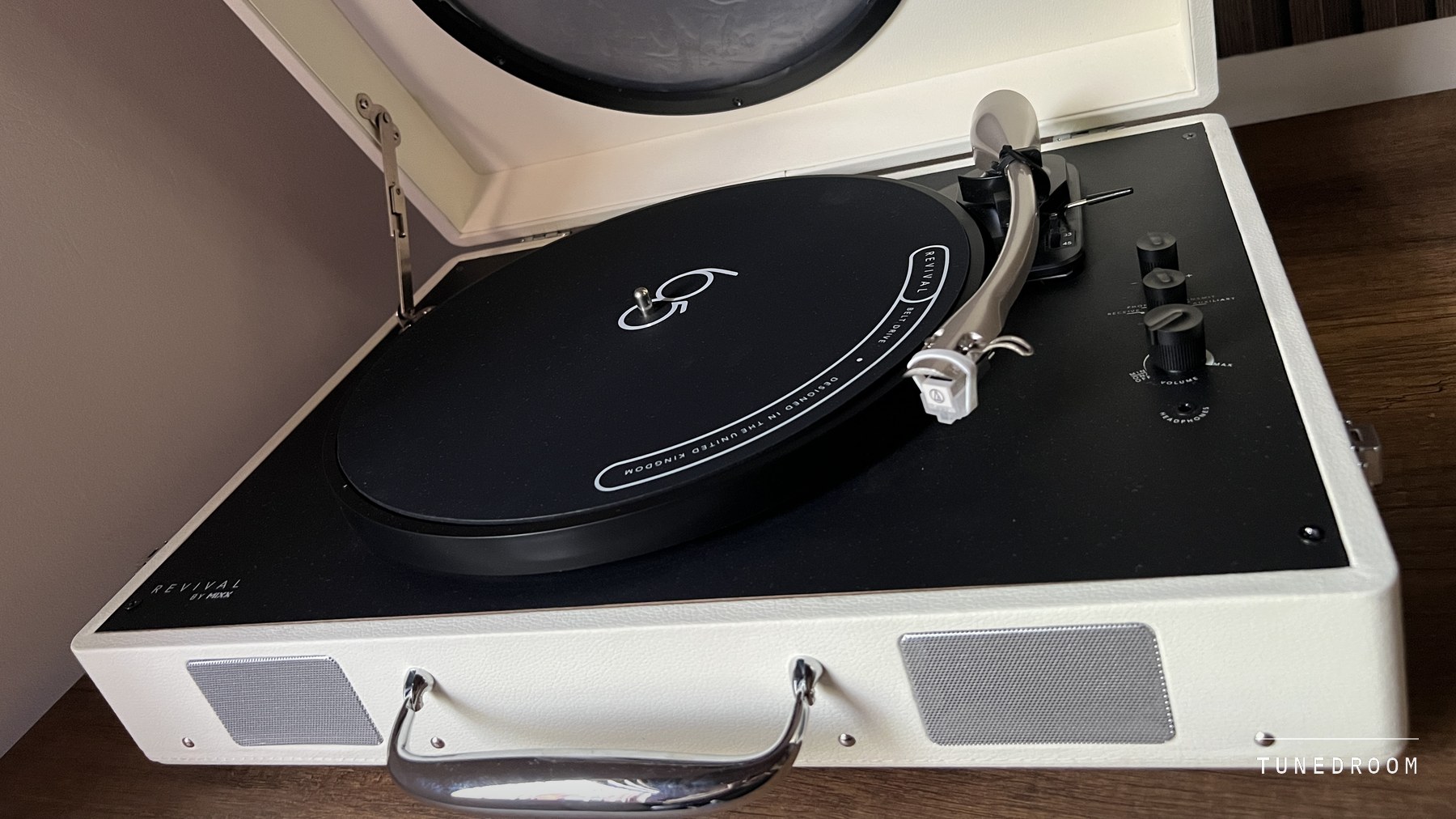
I spent a few weeks with the cream MIXX Revival 65, with The Best of Sade doing most of the work and a few newer 45s filling the gaps. The usual way to judge a suitcase player is to listen to its built-in speakers and stop there, which would miss the most useful thing about this one.
- Cartridge
- Audio-Technica AT3600L moving magnet, replaceable stylus
- Speeds
- 33 1/3 and 45 RPM, with a pitch trim of about 10 percent
- Ways out
- Built-in speakers, RCA line out, Bluetooth transmit, 3.5 mm headphones
- Ways in
- Bluetooth receive and a 3.5 mm aux input
- Speakers
- Two 35 mm drivers, by MIXX's own specification
- Phono stage
- Built in, with no phono/line switch
- Tested
- A few weeks on a cream unit, USRP-65-CM-053
The signal has four ways out of the case. There are two built-in speakers, a pair of RCA jacks carrying a line-level signal, a Bluetooth transmitter and a 3.5 mm headphone jack, plus Bluetooth and aux inputs that carry sound from a phone the other way. At the start of the chain sits an Audio-Technica AT3600L, a moving magnet cartridge whose stylus you can swap by hand, and that is why the rest of the chain is worth talking about.
Some of those paths I used for weeks and some I only know from MIXX's manual and support pages, and I will say which is which as I go.
The Built-In Speakers Know How Big They Are
Within their limits the speakers are pleasant. In a small living room Sade sat warm and centred, the saxophone had air around it, and there was enough stereo spread to place the band left and right. They filled that room without distorting.
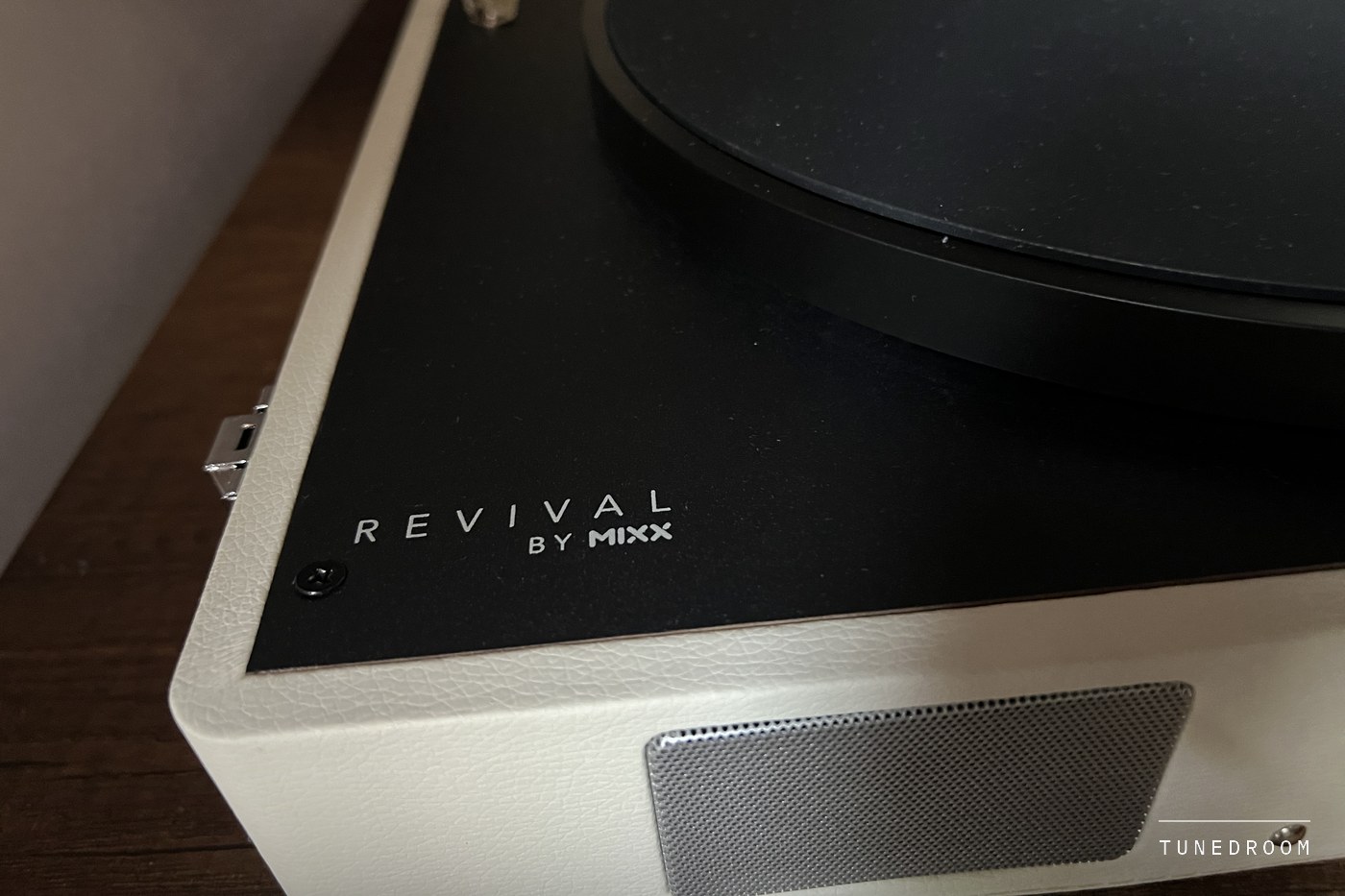
Turn it up and the sound thins, and the bass stays polite rather than punchy. MIXX lists two 35 mm drivers, under an inch and a half across, and a cone that size can only move so much air. The low end rolls away gently rather than collapsing, which is the right way for small speakers to give up.
The other limit is where they live. They share a wooden case with the platter, and a stylus reads vibration as well as the groove. Turntable makers warn that speakers sharing a turntable's surface can feed vibration back into the stylus and build into a boom or a howl at high volume, and a suitcase is as close as a speaker gets. Treat them as the casual path, and move the sound out of the case when you want it loud.
The RCA Jacks Are the Path I Trust
One small panel holds the RCA jacks, the aux input and the power socket, and the RCA jacks are the reason I would pick this over a suitcase player without them. Run into a stereo, they worked without a fault. My notes there are about reliability rather than a critical listen, so what follows is how the output works, not a sound test.
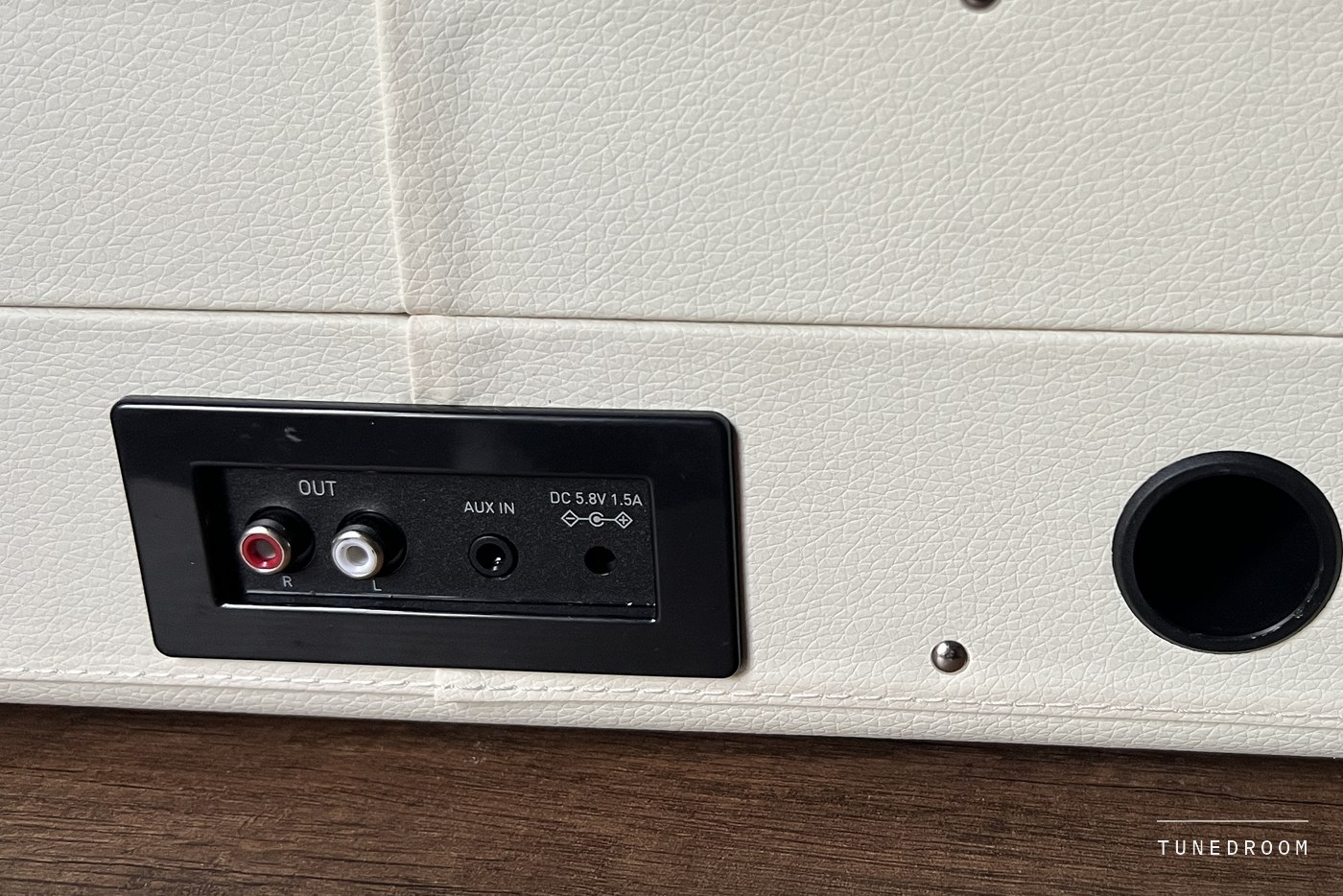
What leaves those jacks is line level. A cartridge produces a tiny signal that has to be amplified and equalised before anything else can use it, and the Revival 65 does that inside the case. MIXX's manual says to connect the jacks to powered speakers or an amplifier, and warns that passive speakers will play very quietly, because nothing in that chain is there to drive them.
MIXX's parts list shows no phono/line switch, so that preamp is always in the path. On an amplifier or receiver, use Aux, CD or another line input, never Phono. And you cannot bypass the built-in stage to try a better external one, which is the first ceiling you meet if the hobby takes hold.
Bluetooth Out Worked for Headphones and Not for Speakers
The transmit setting sends the record out over Bluetooth. MIXX's instructions are to set the function switch to T and put the headphones or speaker into pairing mode, and the two find each other. There is no screen or device list, so keep only one device in pairing mode while you do it.
Bluetooth headphones paired and worked. Speakers were the problem. With a portable Bluetooth speaker and a couple of soundbars, both ends reported a successful connection and no sound came through. My guess is a codec or compatibility gap on the transmit side, but it is a guess. MIXX does not publish its codec, and the one codec every device using Bluetooth's standard stereo profile must support is the basic SBC.
Know what this path does to a record, too. The cartridge's analog signal is digitised and compressed for the radio, then decoded again at the other end. That is fine for headphones, and not something I would build a living room around.
Wireless headphones worked, and for them transmit mode is a genuine convenience.
For a soundbar or a Bluetooth speaker, plan on a cable from the RCA jacks to an analog input.
The Headphone Jack, and Two Ways In
The headphone jack is the quiet path. The manual says the built-in speakers stop once a wired pair is plugged in, so it is a straight swap, and it keeps the signal analog all the way to your ears, a more direct late-night route than Bluetooth headphones.
The two inputs turn the case into a speaker. A phone paired in receive mode within seconds, and in the few weeks I had it the stream never dropped. The manual has the aux input doing the same job with a cable. Either way you are hearing the two small drivers, so expect the same polite bass.
The Cartridge Is the Reason to Choose This One
The AT3600L is a moving magnet cartridge, a type Audio-Technica describes as robust and built around a user-replaceable stylus. On my unit it tracked recent 180-gram pressings and thrift-store 45s alike, with no skips and no warble I could hear, and speed was good out of the box.
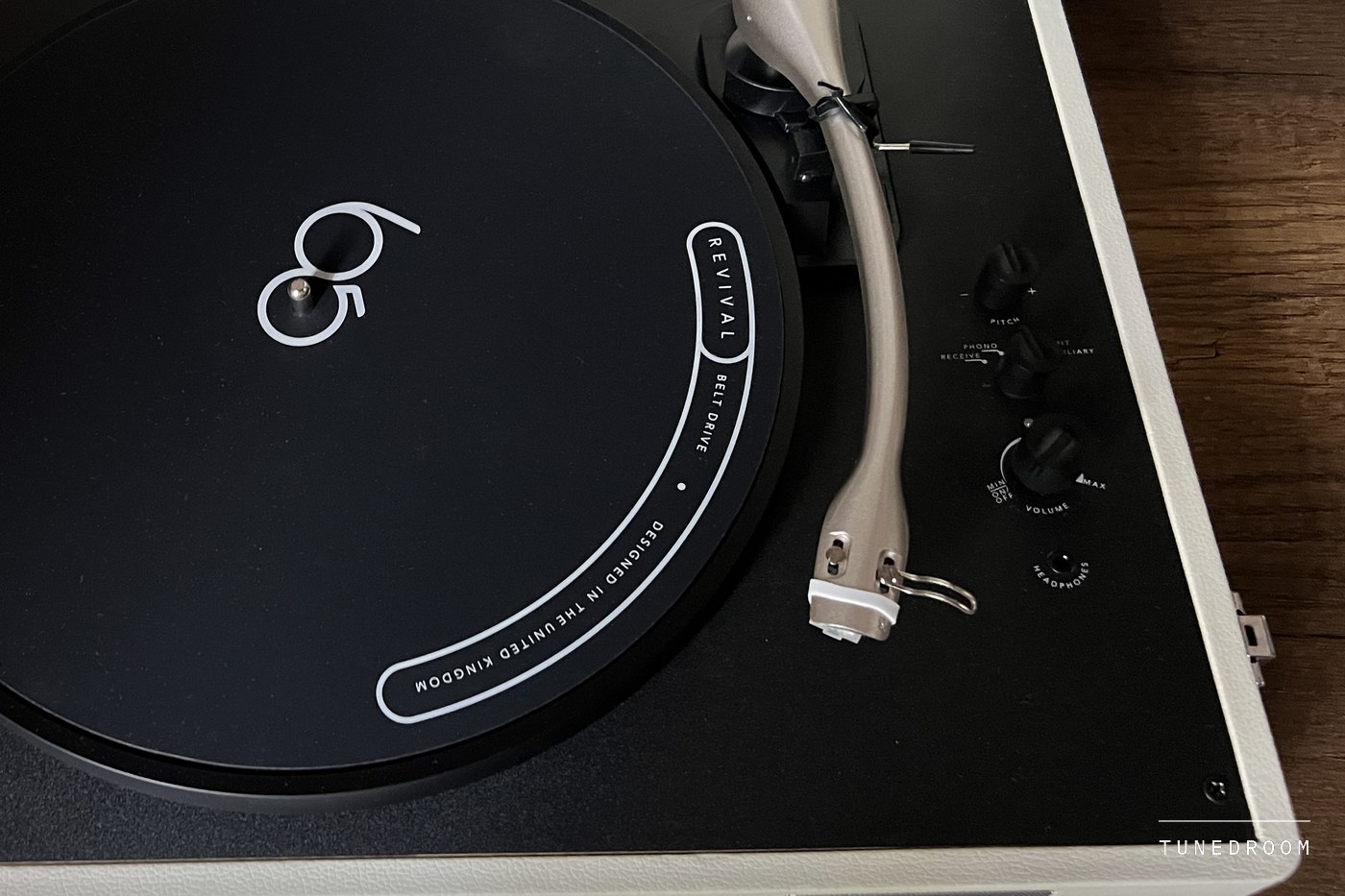
The stylus is the part you will replace, and the part numbers have moved on. MIXX points to Audio-Technica's ATN3600L, which Audio-Technica now lists as discontinued in favour of the like-for-like conical ATN3600LC, rated at roughly 300 to 500 hours, and the elliptical ATN3600LE, sold as a sound quality upgrade and rated at roughly 300.
Those hours go faster than they sound. At an hour a night, 300 hours is about ten months. Swapping one takes no tools. MIXX's instructions are to push the old stylus's front edge down, pull it forward off the headshell, then slide the new one into the groove underneath and push up until it clicks.
Tracking Force, the Counterweight and Your Records
The worry people bring to suitcase players is record wear, and a big part of the answer is how hard the stylus presses. Audio-Technica specifies 3.0 to 4.0 grams for this stylus family, with 3.5 as standard. It is the same family Audio-Technica fits to its own entry automatic turntables, where the force is set at the factory.
The Revival 65 has a counterweight at the back of the arm, and MIXX's advice for a player that skips is to turn it fully in, which raises the force. Nothing I played skipped, so that never came up. I have no measured force for my unit, and MIXX gives no number for where the weight should sit.
If you do turn it in, check the result with an inexpensive stylus force gauge. Audio-Technica's own summary is that too little force lets the stylus jump the groove in loud passages, and too much wears the stylus and the record. MIXX also documents no anti-skate adjustment, and my unit's tonearm had a slight bit of play you would have to look for. Neither caused trouble I could hear, but together they are this arm's ceiling.
The Case, the Window and the Knobs You Touch
The round glass window lets the player run with the lid shut, so the record turns under cover while you watch it through the porthole. A stylus picks up dust from the record as it plays, and Audio-Technica warns that the build-up dulls the sound and can damage the stylus, so a player you can close is a player that stays cleaner.
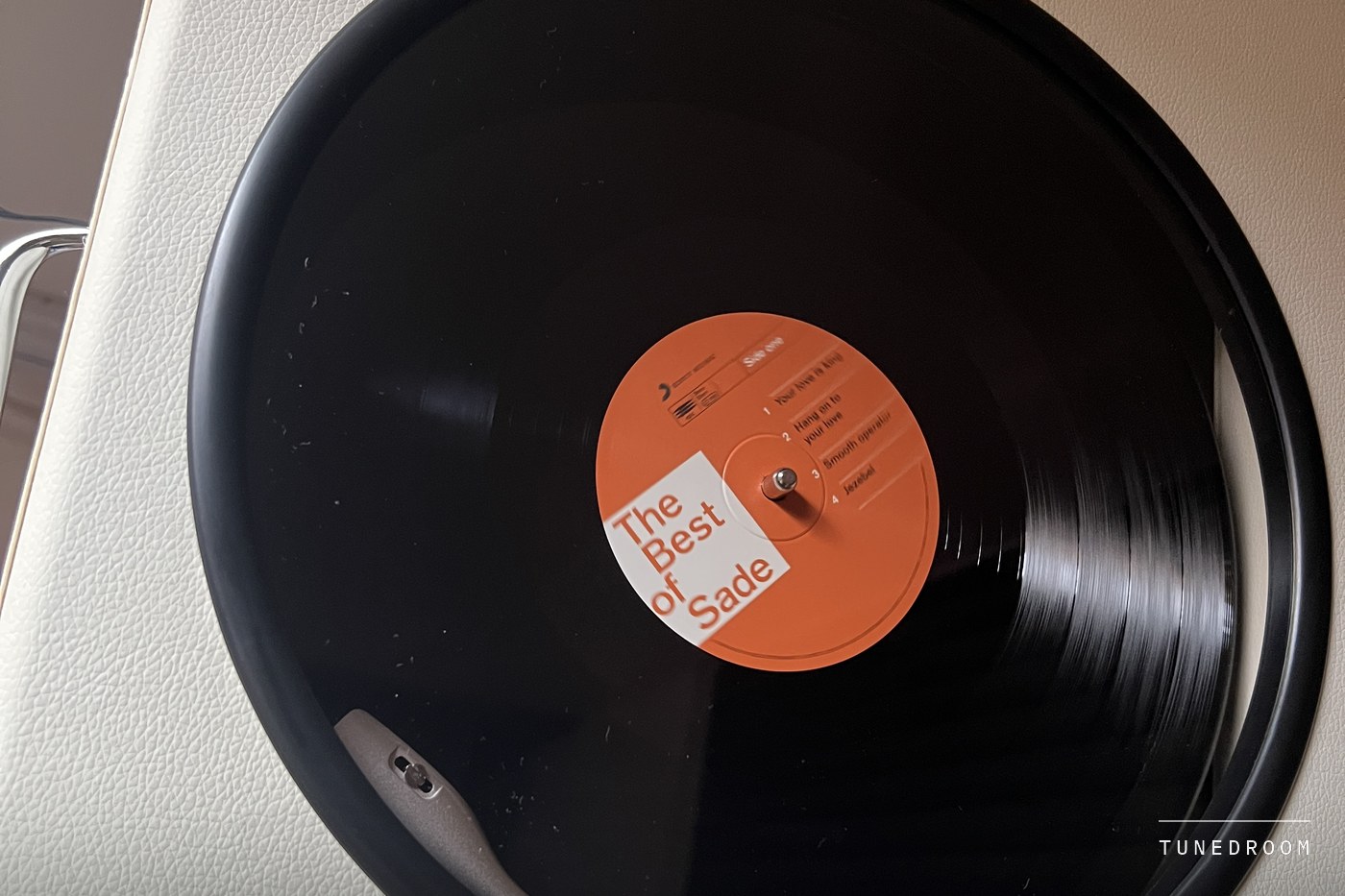
It is properly portable too. The metal handle is solid, it is light enough to move between rooms one-handed, and the wood and faux leather body did not creak or flex. The cream finish is the one to think about. Faint marks had gathered around its latch and handle within a few weeks of daily use, so pick a darker finish if it travels.
Setup took about five minutes, with the belt and stylus already fitted. The cueing lever lowers the arm smoothly, a clip holds it in its rest for storage, and auto-stop caught the end of most 33s, with a switch to turn it off for 45s or short run-outs. The pitch knob trims speed by about 10 percent either way.
What Carries Forward When You Outgrow It
The upgrade path starts with speakers, not with the turntable. Powered speakers with a line input, on their own shelf, fix both limits of the built-in drivers at once, their size and the case they share with the stylus. They also outlast this player, since any future turntable can feed them, directly if it has a preamp or through a phono stage if it does not.
Inside the case, the stylus is the only upgrade. The elliptical ATN3600LE is the one Audio-Technica offers for this cartridge, at the cost of a shorter rated life. Audio-Technica also says the conical ATN3600LC keeps proper contact with the groove even when the cartridge is not quite level, which matters on an arm with no documented alignment adjustment, so the conical is the sensible default and the elliptical is the experiment.
That is the whole list. The preamp cannot be bypassed, the arm has no documented anti-skate, and MIXX documents stylus swaps rather than cartridge changes. When those limits start to bother you, the next step is a separate turntable, and the Revival 65 moves to a second room, which is where a suitcase player earns its keep anyway.
Where a Few Weeks of Records Left Me
I expected to judge this on its speakers and ended up judging it on its jacks. The built-in sound is pleasant and small, the Bluetooth input is dependable, and the cartridge does its job without drama.
As a self-contained player, or run into a stereo or powered speakers by cable, it is an easy recommendation and a sensible first turntable. If your plan depends on sending records wirelessly to a soundbar or a Bluetooth speaker, know that it failed with every one I tried, and plan on a cable before the box arrives.
Buy it for the cartridge and the RCA jacks, and treat the built-in speakers and Bluetooth as conveniences. Add powered speakers and it becomes the first piece of a real system rather than the whole of one.
It scores 8.5 rather than higher because one of its four outputs failed with the soundbars and speaker I tried, and the fixed preamp and simple arm set a ceiling you will eventually meet.
Can I connect it to my receiver's phono input?
No. The RCA jacks carry line level from the player's own preamp, which cannot be switched off. Use Aux, CD or another line input, because a Phono input would add a second phono stage and overload the signal.
Will it work with passive speakers?
Not on their own. MIXX says the RCA jacks will play them at very low volume. Put an amplifier or receiver in between, or use powered speakers with a line input.
Can I send my records to a Bluetooth soundbar?
In my testing a portable speaker and a couple of soundbars connected and played nothing, while headphones worked. Run the RCA jacks into an analog input on the soundbar instead, if it has one. An optical-only soundbar needs an analog-to-digital converter in between.
Which replacement stylus fits?
MIXX names Audio-Technica's ATN3600L, which is now discontinued. Audio-Technica's current replacements for the AT3600L are the ATN3600LC conical, rated at about 300 to 500 hours, and the ATN3600LE elliptical, rated at about 300. MIXX support can confirm the fit.
Do the speakers keep playing with headphones plugged in?
No. The manual says the built-in speakers stop once wired headphones go into the jack, so it is one or the other.
What should I do if it skips?
MIXX suggests a stable, level surface and a clean record first, then turning the counterweight at the back of the tonearm fully in to raise the tracking force. Check the result with a stylus force gauge against Audio-Technica's 3.0 to 4.0 gram range.
More in this category