A Bike Speaker That Kept Coming Indoors
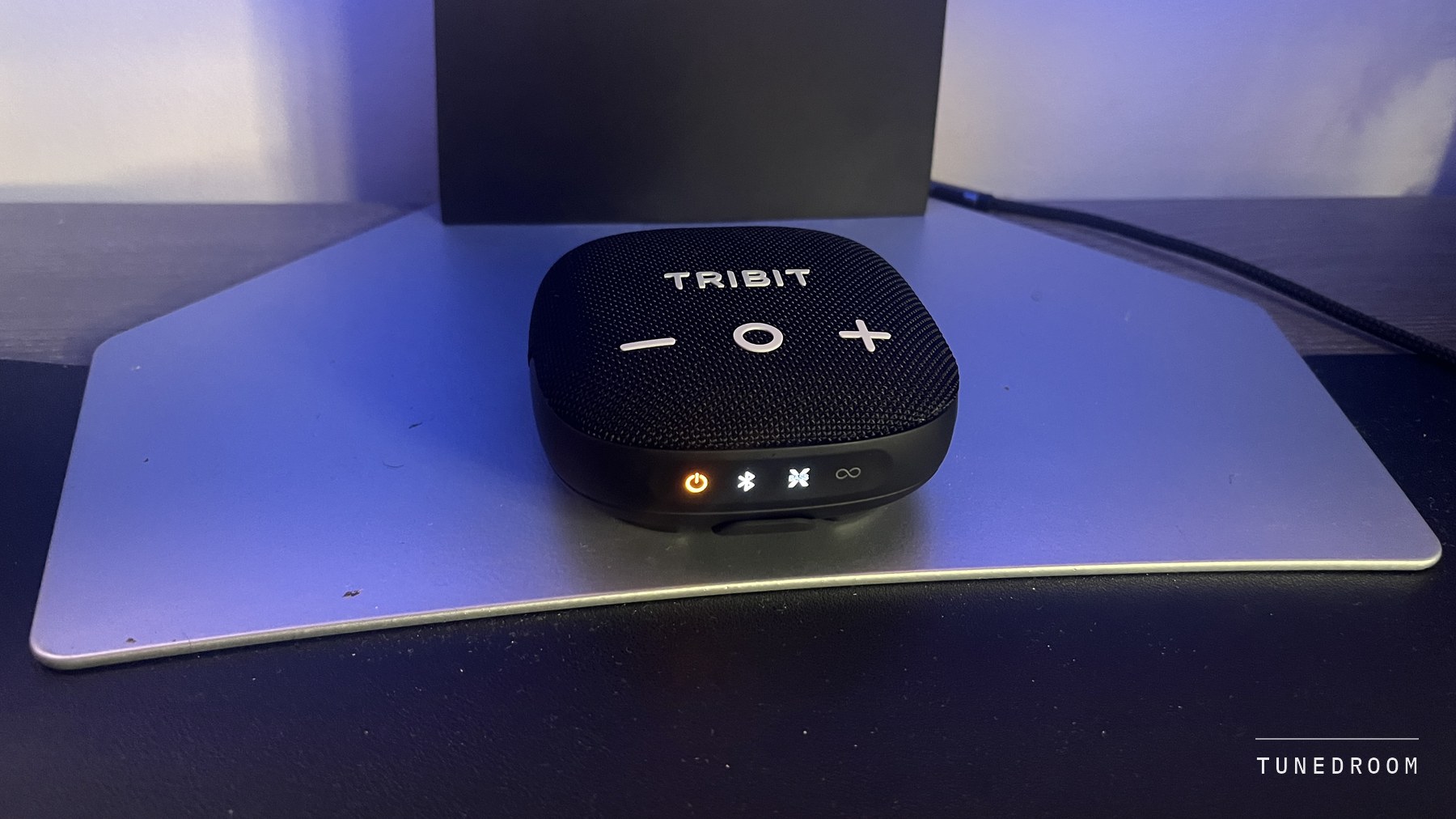
Tribit sells the StormBox Micro 3 as a bike speaker, with a silicone strap for handlebars and an IP68 rating for rain and mud. I lived with a black one for a few weeks, and it moved between an office desk, the kitchen fridge, the front of my monitor stand and the handlebar of a bike. Three of those four places are rooms.
- Driver
- One 48 mm driver with two passive radiators
- Channels
- One; stereo takes a second Micro 3
- Rated range
- 63 Hz to 20 kHz, per Tribit's manual
- Connection
- Bluetooth 6.0 with AAC and SBC, no aux input
- Battery
- 4,800 mAh, rated 24 hours at half volume
- Weight
- 330 g
- Protection
- IP68, with a rubber cover on the USB-C port
- Tested
- A few weeks on a black unit (BTS36)
So this review stays indoors. A speaker in a room has to deal with walls, tabletops, quiet evenings and how far it sits from your ears, and those shape what one 48 mm driver can do in ways a trail never tests. That means volume, placement, what the app's EQ is for, and where a pocket speaker fits between a phone and a bigger box.
The rest of this mixes my own weeks with it, Tribit's manual and support pages, and how sound behaves in a room, and where a point is not from my own use, I say where it comes from.
Indoor Volume Is Where the Tuning Pays Off
Out of the box it sounds warm without turning muddy. Voices sit full in the middle, and acoustic and vocal tracks avoid the thinness that trips up so many small speakers. Tribit did not buy loudness by pushing the treble, and I never needed the app to make it sound right.
It also goes loud for its size. At about 80 percent it fills a medium-sized room, and past that you can hear the driver reaching its limits. Backing off, or trimming the bass in the app, keeps it clean.
The hardware explains that ceiling. One 48 mm driver does all the work, helped by two passive radiators, cones with no motor of their own, moved by the air pressure the driver builds inside the case. Engineers who tune small speakers note that a small diaphragm limits both how loud and how deep it can play, and that bass is where a driver travels furthest. At desk and kitchen volumes it works comfortably inside those limits, and a medium room takes it close to the edge.
XBass Is a Low-Volume Button
XBass is one button that lifts the low end, and Tribit tuned it hard. Played at a moderate level, hip-hop, electronic music and heavier pop gain punch and kick drums gain weight, and the Micro 3 turns from a good speaker into a fun one.
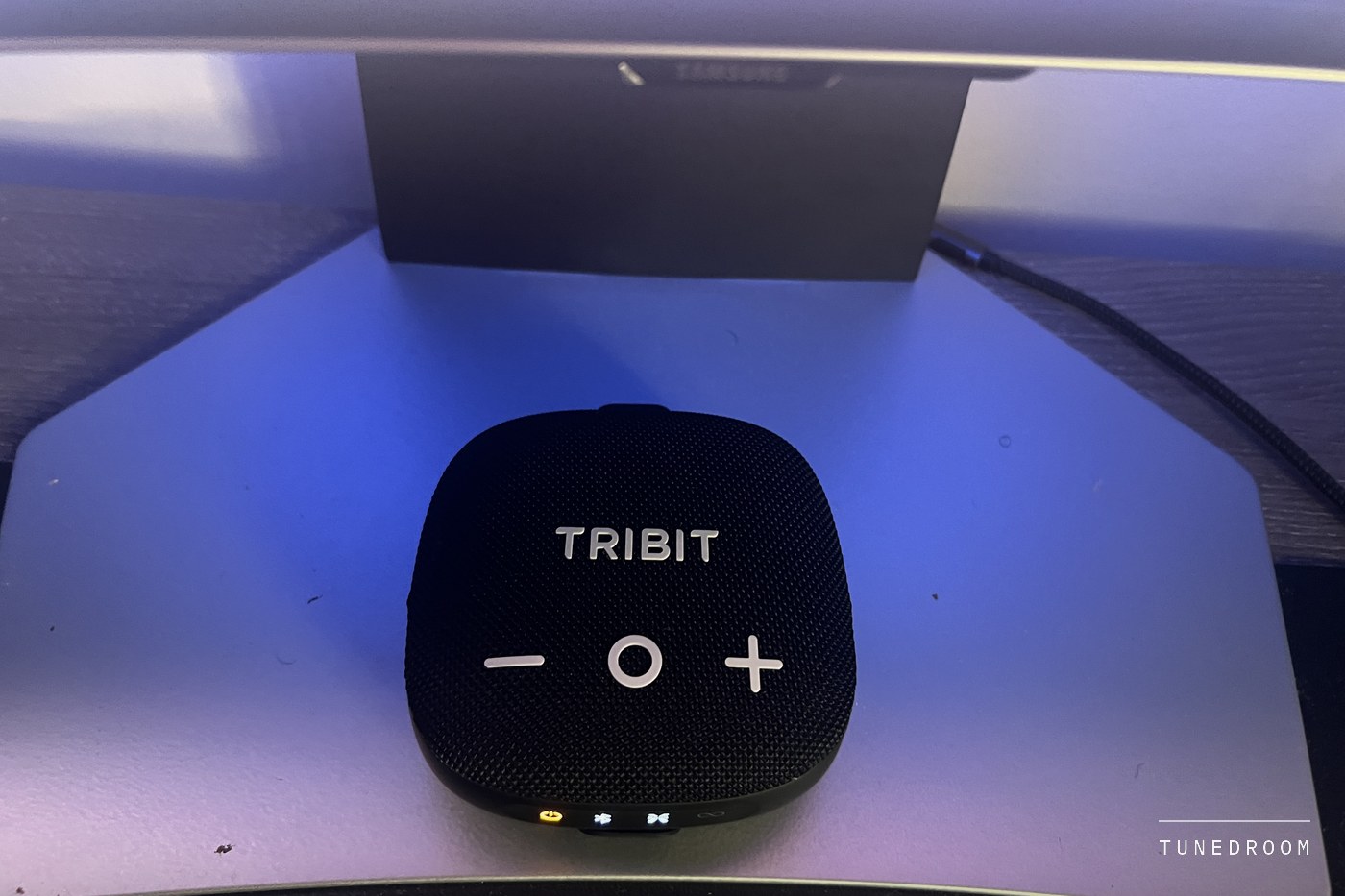
The trouble starts around two-thirds of full volume. Turn XBass on at that level with a track built on heavy bass, and the driver starts clipping, the passive radiators reach the end of their travel and the low end goes flabby. So I left it off most days, used the Popular or Signature preset in the app as my everyday sound, and kept XBass for quiet background music when I wanted more warmth.
That split follows how hearing works. As the volume comes down, the ear loses bass faster than it loses the midrange, which is what the equal-loudness contours in the ISO 226 standard map, and why some speaker makers offer a loudness setting that boosts bass at low volume. Played quietly, XBass does that job. Turned up, your ears need less help, the driver has less travel to spare, and the same boost turns into distortion.
Let a Wall Do Some of the Work
The cheapest bass upgrade for a small speaker is where you put it. At low frequencies a speaker this size radiates in every direction, backwards included, and a wall close behind it reflects that sound forward, where it adds to the rest. Studio monitor makers publish the numbers, up to 6 dB more against a solid wall, up to 12 in a corner and up to 18 where a corner meets the ceiling, mostly in the bass.
The room supplies that extra, so the driver does not travel any further to get it. XBass works the other way, asking the driver and radiators to move more, which is why it runs out near full volume. A wall behind the Micro 3 adds bass without spending its headroom.
The gap matters as much as the wall. A foot or two out from one, the reflection returns out of step and cancels at the frequency where the gap is a quarter of a wavelength, which at those distances lands in the upper bass where this speaker carries its weight. Monitor makers put that dip at 6 to 20 dB and note that no EQ setting fills it. Right up against the wall, the dip moves up and out of the bass. Stuck to a fridge door, the Micro 3 has a large flat panel directly behind it, which is the same idea.
My notes fit that without proving it. The radiators give the low end a weight you can feel through a surface that resonates, and the magnets sit on a slight riser that leaves a small gap behind the speaker. I did not measure it against a wall and in the open, so read those numbers as physics rather than a test result.
For fuller sound at the same volume, put its back near a wall or into a corner and leave XBass off.
If that turns boomy, trim the lowest EQ bands. If a spot a foot or two from the wall sounds thin, move the speaker, because no EQ setting fills that dip.
The Magnet Is a Speaker Stand
The magnets in its back held the Micro 3 upright on a fridge door and on the front of my metal monitor stand, and it never slipped off either. Its rubber feet kept it from scratching anything, and it soon stopped having a home and lived on whatever was nearest.
Indoors that is more than convenience. Lying on its back on a desk, the grille faces the ceiling and the sound reaches you from the side of the driver, which is fine for background music. Stuck to something upright, it faces into the room at a useful height, which is what monitor makers ask of their own speakers, aimed at the listener and near ear level. A fridge door or a monitor stand gets you that for nothing.
Tribit limits the magnet to static metal surfaces and warns against anything that moves or vibrates, vehicles included, because the speaker can come off. At home that rules out the side of a running washing machine.
A Week in Place of My Monitor's Speakers
For about a week the Micro 3 stood in for the speakers built into my Samsung Odyssey OLED G9, and I only switched back because I felt I should. No other result from these weeks says more about it as a room speaker.
A desk is also where its limits are easiest to hear. It is one driver and one channel, so a stereo mix folds into a single point in front of you. For calls, video and background music that costs little. For an album with a wide mix you lose the left and right, and the fix is a second Micro 3, not a setting.
There is no aux input, and the USB-C port is for power only, so every source reaches it over Bluetooth. The manual says it can connect up to two devices, which suits a computer and a phone on one desk, though that part is from the manual rather than my notes. One default is worth changing. It switches itself off after 15 minutes without audio, which can catch you out in a quiet stretch, and the app can turn that off.
What the App EQ Does Indoors
The Tribit app connected straight away and stayed connected. It carries a 9-band EQ, a set of presets, a sleep timer, the auto-off setting and firmware updates, and it saves custom EQ profiles, so you can build one and leave it.
Indoors, the EQ's real job is the spot the speaker sits in. Against a wall or in a corner the room is already adding bass, so trim the lowest bands. Out on a table in the middle of a room, a little low-end lift makes up for the wall it does not have. Save a profile for each place it lives.
What EQ cannot do is fill a dip. If it sounds thin in one spot and fuller in another, that is the room, and moving the speaker is the fix. Late at night the logic flips. At low volume a gentle bass lift, or XBass itself, keeps the balance, and the sleep timer turns it off once you have dropped off. The app can also silence the voice prompts, which suits a bedside speaker.
Battery, Charging and the Knocks It Takes
The battery is where an outdoor spec turns into indoor convenience. Across two weeks or so of casual listening it needed charging only twice, and hours of music at a moderate indoor level barely moved it. Tribit rates the 24 hours at half volume with the default EQ, so expect less with XBass on or the volume up.
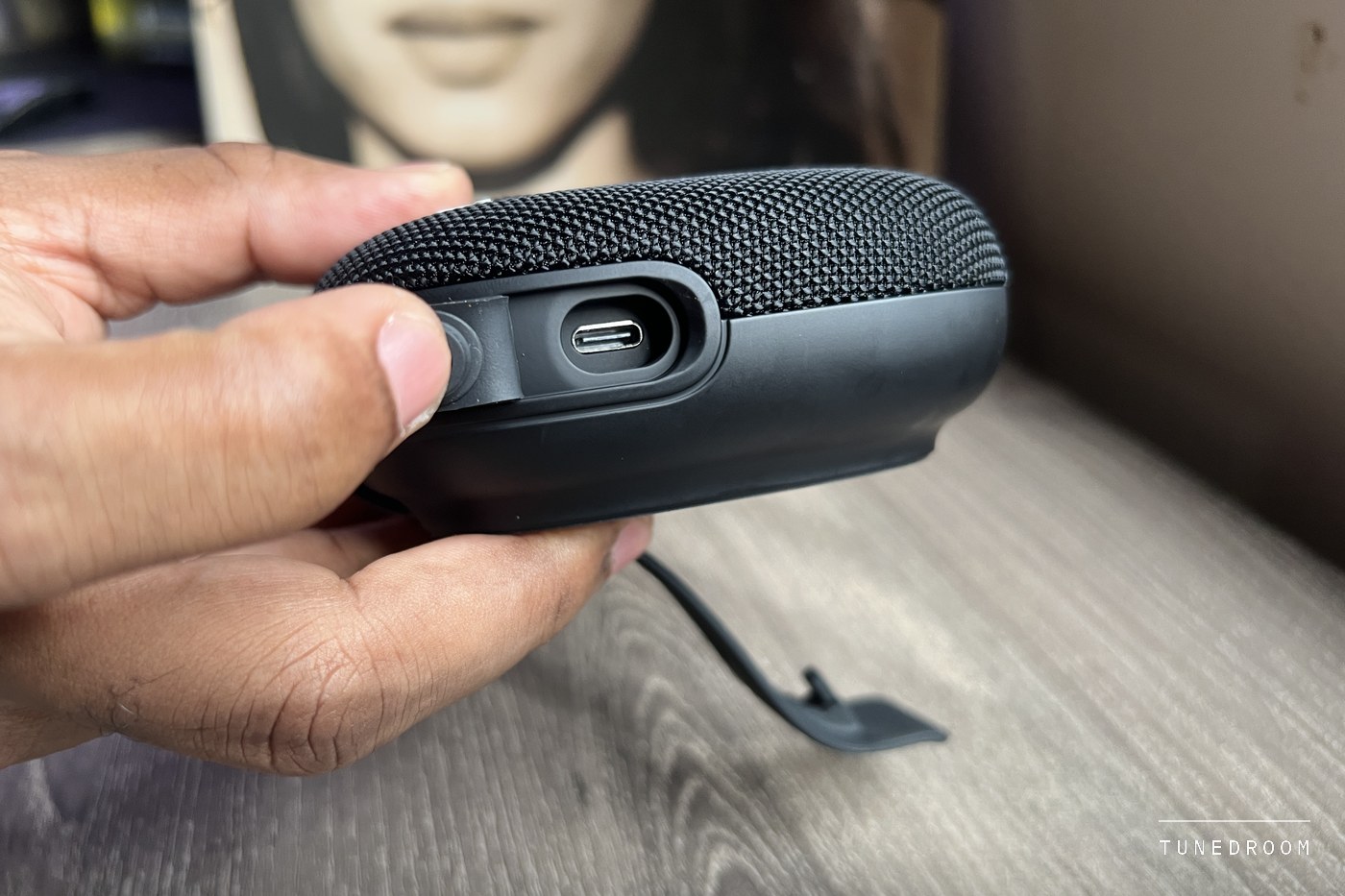
Charging from empty takes around two hours on a 15 W USB-C charger, and the box holds a USB-C cable but no charger. A short top-up rescued me once when I had forgotten to charge it. It can also top up a phone, though Tribit says only while its own battery is above 20 percent.
It also survived a desk-height drop onto a hardwood surface with the grille, the buttons and the sound unharmed. The IP68 rating covers dust and immersion, and Tribit asks for the rubber cover on the charging port to be tucked in tightly anywhere wet or humid, which at home means the kitchen and the bathroom. My one cosmetic complaint is the white Tribit logo on the grille, which is louder on a black speaker than I would like.
Between a Phone and a Bigger Speaker
Against a phone, or the speakers built into a screen, the Micro 3 is an easy step up, and the week at my monitor is the evidence. It has the driver, the radiators and the tuning that a phone has no room for.
Against a bigger speaker it runs out in predictable places. A medium-sized room already asks for about 80 percent, it cannot play stereo on its own, and on Tribit's own figures the octave below 63 Hz is out of reach. A second Micro 3 fixes the stereo. Set a Stereo pair in front of you, one each side, or use Party mode, where both speakers play the same thing, to cover a kitchen and the room next to it.
Tribit pitches a trail speaker, and indoors it earned its keep as a room speaker. Give it a wall to work with and save XBass for quiet evenings, and it does more in a room than its size suggests.
For a desk or a kitchen, this is the pocket speaker I would buy. The tuning is warm and full at indoor volume, the magnet puts it on a fridge or a monitor stand facing you, and the battery barely needs thinking about.
It scores 9 rather than higher because in a room it is one channel from one small driver, every source has to reach it over Bluetooth, and filling a medium room takes it past the point where XBass has to come off.
Can I connect it with a cable?
No. There is no aux input, and the USB-C socket only charges the speaker or tops up a phone from it. Every source connects over Bluetooth.
Can two of them play in stereo?
Yes, but only with another Micro 3. Tribit's manual pairs them with the TWS button, and pressing it again on either speaker switches between Stereo mode, which splits left and right, and Party mode, where both speakers play the same thing.
Why does it switch itself off?
By default it powers down after 15 minutes without an audio signal. The Tribit app can turn the auto-shutdown off, which is worth doing for a desk speaker.
Does it get quieter as the battery runs down?
Slightly, near the end. Tribit says it reduces its output below 20 percent to keep the battery stable, and it stops charging other devices at that point too.
More in this category