What the Cheapest Speaker in the Range Has to Give Up
For about a week it went everywhere with me, from the desk to the kitchen, into the shower and out the back door, and it never once gave me a reason to think about it. No pairing fuss, no dropouts, no complaints. For a speaker like this, that is most of the job.
- Driver
- One 45 mm full-range driver, so mono
- Frequency range
- 80 Hz to 20 kHz, by Tribit's specification
- Rated output
- 7 W
- Bluetooth
- 6.0, with SBC and AAC over A2DP
- Battery
- 2,400 mAh, rated 20 hours at 50 percent volume
- Protection
- IP68, floats, MIL-STD-810H drop rating
- Sources
- Bluetooth or a microSD card, no AUX input
- Tested
- About a week of daily use, model BTS68
It is also the least expensive speaker on sale in Tribit's own store, and any speaker at that level is a list of decisions about where not to spend. Drivers, codecs, battery, build and software all cost money, and a maker working to a low price has to choose which to cut. Some cuts you hear on the first song. Others you would never notice.
So this review is organised around those decisions, not a feature list, covering what Tribit chose, what I heard over the week, and whether spending more would buy you anything. Where a detail comes from Tribit's manual or product page and not from my own use, I say so.
The Cut You Hear First Sits Below 80 Hz
The biggest decision is the driver. There is one, a 45 mm full-range unit, and Tribit rates the speaker down to 80 Hz. In musical terms, the lowest open string on a guitar sits just above that, at about 82 Hz, and a bass guitar's low E is an octave lower again, around 41 Hz. The bottom octave of a bass line lives below the PocketGo's floor.
What I heard fits that. There is real bass presence, tight rather than boomy, and nothing earth-shaking. Hip-hop, jazz and podcasts all came through balanced, vocals stayed crisp and natural, and everything above 80 Hz sounded clean. Bass notes do not vanish, because the ear infers a note's pitch from its overtones even when a small speaker cannot play the note itself. What goes missing is the weight underneath.
It also plays louder than its size suggests. It filled a room more than I expected and did not compress or turn harsh at 80 percent volume, the furthest I pushed it.
This is where spending more pays most clearly. Deeper bass takes more moving air, which means a larger driver, a passive radiator or a bigger box, and all three cost money and pocket space. No equalizer boost can conjure air the cone does not move. If you want to feel a kick drum rather than just hear it, this is the reason to step up.
One Driver Means Mono, Which Costs Less Than It Sounds
The second decision follows from the first. One driver means one channel, so the PocketGo plays both sides of a stereo recording mixed together. Almost nothing in the mix is lost, since a guitar panned hard left still comes out of the same cone. What goes is the spread.
That matters less than it seems. A stereo image depends on the angle between the two sources as seen from where you sit, and the international reference layout puts left and right speakers 60 degrees apart. Two drivers a few centimetres apart in a box this size would arrive from almost the same direction past arm's length, so a stereo version of this speaker would mostly be stereo on paper.
The real way back to stereo is a second speaker. Turn two PocketGos on, hold the Bluetooth button on the first for five seconds until the voice prompt, then press it once on the second. Only the first talks to your phone, and Tribit says it pairs only with another PocketGo. I have not heard a pair, so that is Tribit's description, not my finding, but it is the one upgrade here that fixes a cut instead of working around it.
The Codec Is the Corner You Are Least Likely to Hear
The PocketGo supports two Bluetooth codecs, SBC and AAC, with no aptX or LDAC. On headphones I would count that against it. On this speaker it is the right place to save money, and the cut I would least expect anyone to hear.
SBC is the one codec the Bluetooth stereo audio profile requires every device to carry, so every phone can use it. AAC is the codec Apple asks accessory makers to support, and Apple says it beats SBC at the same bit rate, so an iPhone gets the codec Apple recommends. Anything beyond those two would be carrying extra detail into a single small driver that stops at 80 Hz and plays in mono. The speaker sets the ceiling long before the codec does.
The Bluetooth 6.0 badge deserves the same shrug. Its headline additions are Channel Sounding, which measures the distance between two devices, and changes to how low-energy devices scan, advertise and time their packets. Tribit lists only the classic profiles, A2DP for music, AVRCP for controls and HFP and HSP for calls, with no LE Audio codec, so music reaches this speaker the way it has reached Bluetooth speakers for years.
What I can speak to is the connection, the most dependable part of the week. Pairing was instant, reconnecting to a known phone was faster still, and it held a solid link throughout my house with the phone in another room, with no dropouts or stutters. Tribit's manual adds that it can stay connected to two devices at once.
Do not pay extra for a longer codec list or a newer Bluetooth version in a speaker this size. The driver and the box decide what you hear, and the connection decides whether you enjoy it.
Where Tribit Did Not Cut, the Battery
The battery is where the PocketGo spends its money instead. Tribit fits a 2,400 mAh cell, rates it for 20 hours at 50 percent volume, and credits part of that to power management it calls RunStretch, which adjusts consumption to the volume and the music.
Some arithmetic helps. At 3.7 volts that cell holds about 8.9 watt-hours, so 20 hours means an average draw under half a watt for the whole speaker. The 7 W output figure is the rated maximum, and listening at half volume uses a small fraction of it.
My own use cannot confirm the full rating. Most days it played for half an hour to 45 minutes at around 60 to 65 percent volume, and it went nearly a week between charges; which is only a few hours of playing, so it measures convenience rather than endurance. I never ran it flat in a day, and the battery reading in Tribit's app showed clearly where it stood.
Charging takes about three hours over USB-C. There is no charger in the box, just a USB-A to USB-C cable, and Tribit's manual says a 5 watt charger reaches full charging speed, so any ordinary USB charger will do and a more powerful one gains nothing. A red light blinks below 20 percent, stays on while charging and goes out when it is full.
The Build Is Where It Feels Least Cheap
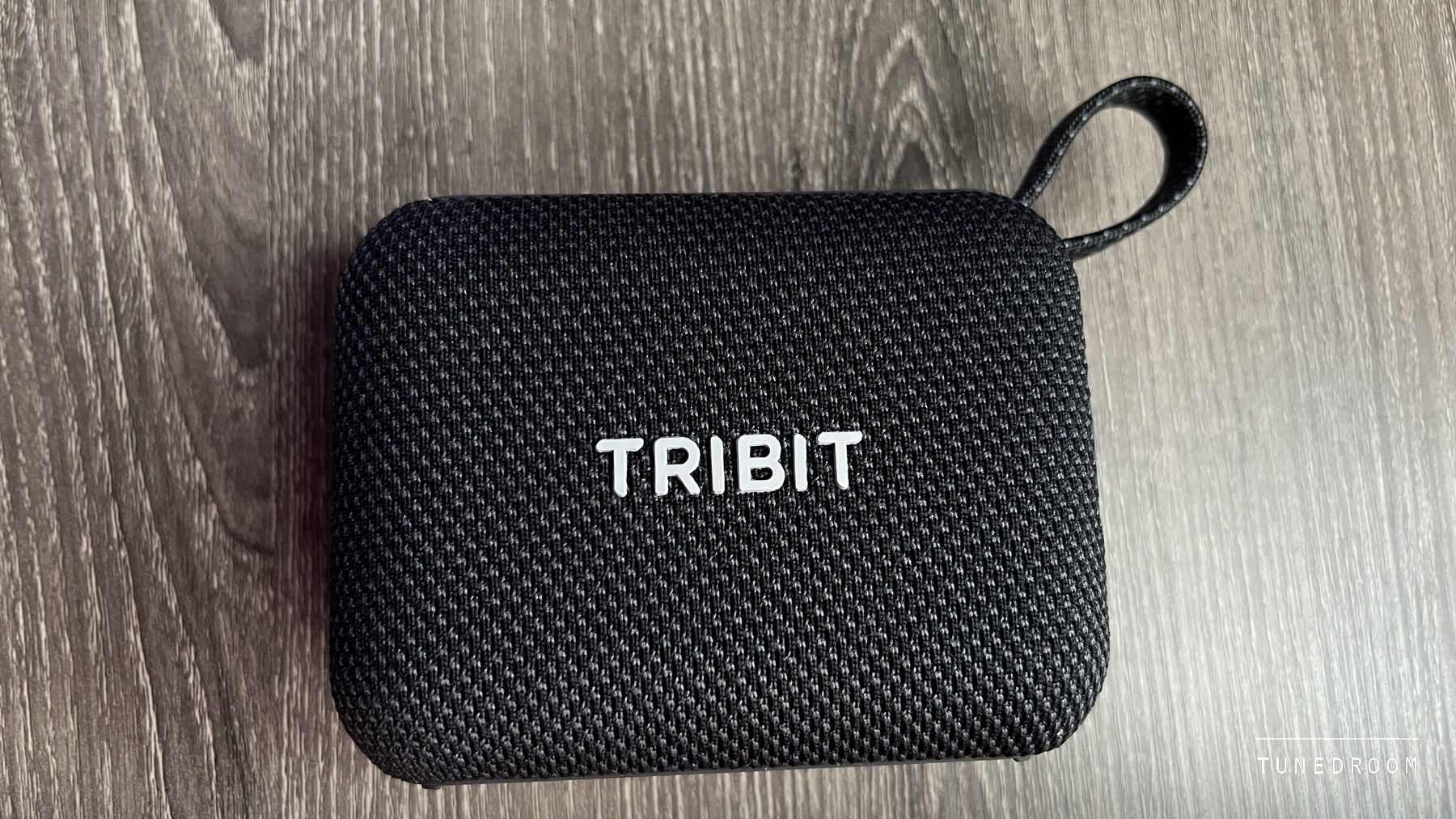
The other place Tribit did not economise is the part you hold. The PocketGo is a rounded rectangle of 108 by 81 by 42 mm wrapped in grippy fabric mesh, and at 220 grams it sits in a palm and disappears into a jacket pocket. The five buttons along the top have a firm, tactile click that feels more expensive than the speaker is, and a fabric loop on one corner hangs it from a hook or a bag.
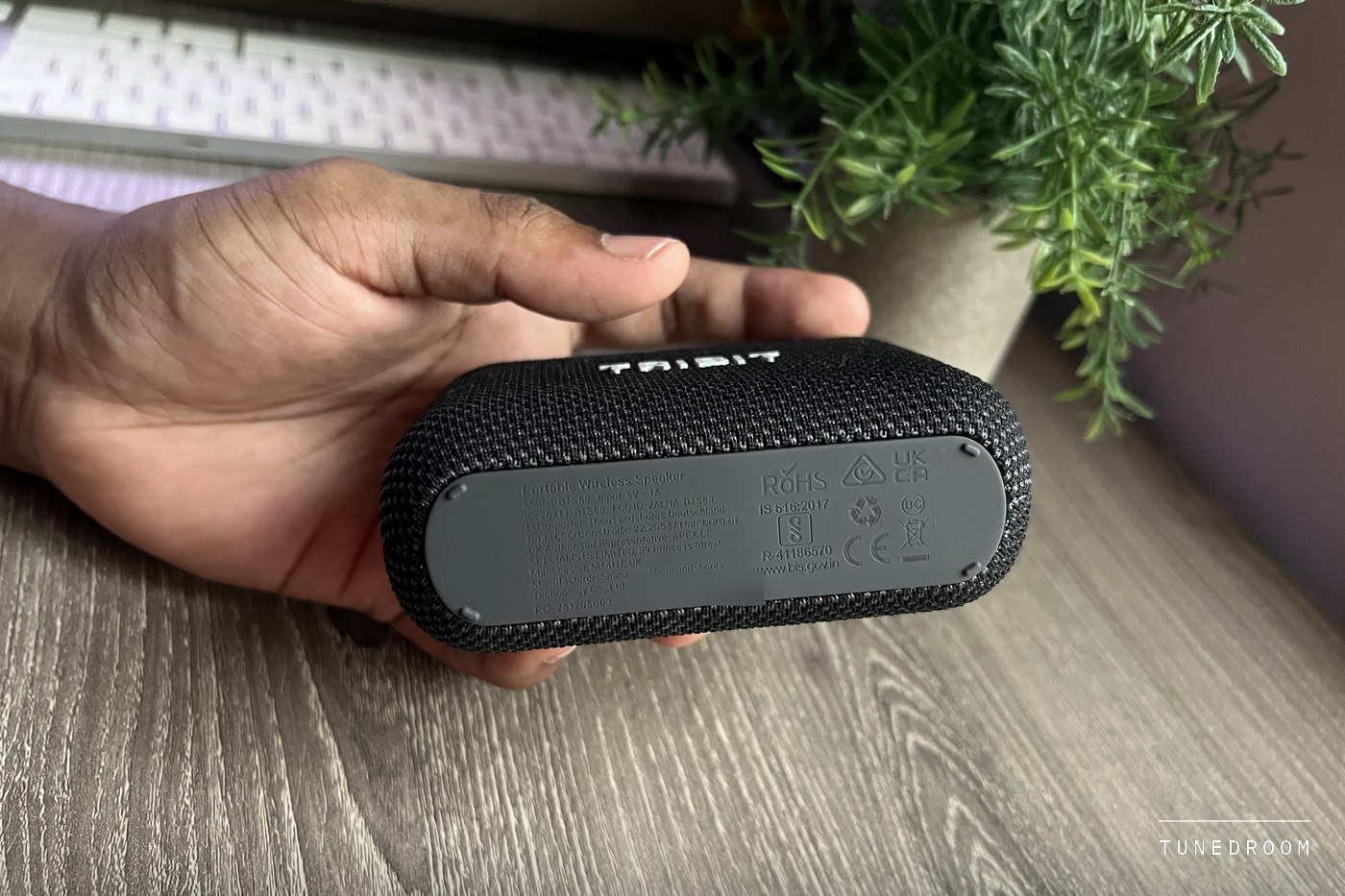
It went into the shower and outside during the week, and I dropped it twice by accident without leaving a scuff. Tribit rates it IP68, says it floats, and cites the MIL-STD-810H military test standard for drops, with its Amazon listing giving a drop height of 1.22 metres, about four feet.
Read the IP68 closely. The 6 means dust-tight. The 8 means it survives continuous immersion under conditions the maker sets, which only have to be tougher than the one metre for 30 minutes of an IPX7 rating. Tribit publishes no depth or time for the PocketGo, so treat it as proof against rain, splashes, the shower and a tumble into a pool, not as licence to take it underwater.
The App, the Buttons and the Microphone
A speaker this cheap could easily have shipped without an app, and Tribit's made a real difference to how this one sounded. It has six presets and a custom equalizer, and changes apply immediately. The default Tribit Signature tuning is decent, Popular and Rock brought out more life and energy, and a few minutes with the custom equalizer lifted it from good to properly impressive for something this small. The app also sets the auto-off timer and shows the battery level, but the speaker pairs and plays without it.
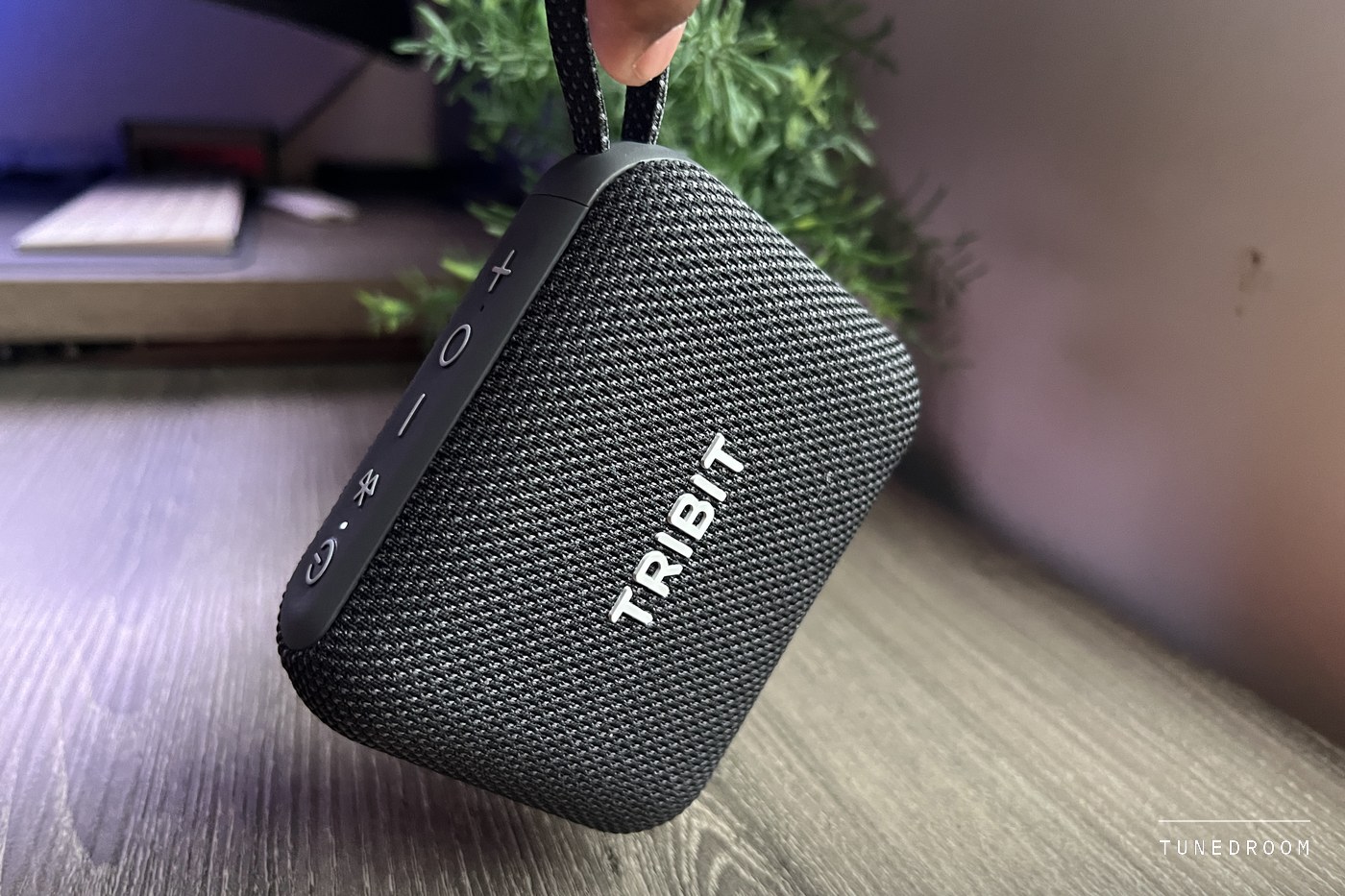
The buttons do more than they appear to. In Tribit's manual, one press of the play button pauses or resumes, two skip forward a track and three go back. Holding it for two seconds wakes your phone's voice assistant, and holding both volume buttons for about five seconds resets the speaker.
The microphone is for casual calls. Both sides of the call came through clearly, but I would not run a long meeting through it.
Two Ways In and No Cable
The last decision is about inputs. The PocketGo takes sound from Bluetooth or a microSD card and has no AUX input. Tribit says the slot, under the same flap as the USB-C port, reads cards up to 128 GB with MP3, WAV and WMA files, and a double press of the Bluetooth button switches between card and phone.
The card is the interesting input for anyone who follows a signal path. Music on a card never crosses a Bluetooth link, so there is no phone, radio or codec in the chain, and a WAV file reaches the speaker's electronics without lossy compression. At this size I would not expect that to sound different, but it gives you a player that works with your phone off, flat or out of signal.
The missing AUX input is a real cut, and the one most likely to matter on this site. Every source has to be Bluetooth or a file on a card, so a laptop's headphone jack, a television's analog output or an older player without Bluetooth has no way in. A small speaker that also takes a cable is worth paying for if you need one.
Where Spending More Starts to Pay
Line the decisions up and Tribit's logic is plain. It cut a second driver, deep bass, extra codecs and a wired input, things that are either hard to hear at this size or easy for a pocket speaker to live without. It kept what you notice every day, the battery, the build, the water rating, the connection and an app that works.
That also marks where the next step up begins. Spend more for bass you can feel below 80 Hz, more volume than one small driver can give a group outdoors, or a cable input for a laptop or television. Do not spend more for a newer Bluetooth version, more codecs, more battery or a tougher shell, which the PocketGo already covers. For stereo, the better route is a second PocketGo, not one bigger speaker.
It is the speaker I would hand to anyone who wants music in the kitchen, the shower, a bag or a campsite without thinking about it. It is not for someone building a small system, because the corners it cuts are exactly the ones that person will hear.
An easy recommendation as a pocket speaker. The battery, the build, the water rating and the connection are better than the price suggests, and the corners it cuts are mostly ones a speaker this size could not have done well anyway.
It scores 8.8 rather than higher because mono playback, an 80 Hz floor and no wired input are real limits for anyone who cares about the whole signal path, even when they are the right trade for a pocket speaker.
Can it stay connected to two phones at once?
Tribit's manual says it can connect to two devices at the same time.
Does the speaker have a skip-track control?
Yes. According to Tribit's manual, two presses of the play button skip forward a track and three go back one. A single press plays or pauses.
Can I plug in a laptop or TV with a cable?
No. There is no AUX input, and Tribit lists no wired audio input of any kind. Sources are Bluetooth or a microSD card with MP3, WAV or WMA files.
Can it go in the shower or a pool?
Yes. It is rated IP68 and floats, and mine spent time in the shower. Close the rubber flap fully first, and since Tribit publishes no immersion depth or time, do not take it underwater on purpose.
More in this category